The hidden costs of traditional fax rarely show up on invoices. Hardware looks cheap. Fax services appear simple. But once phone lines, labor time, compliance exposure, and workflow friction enter the picture, fax cost balloons quietly.
This article breaks down what businesses actually pay to send and receive faxes, and why those costs persist long after the machine is installed.
Hidden Costs of Traditional Fax: What the Invoice Never Shows
The hidden costs of traditional fax begin the moment a business commits to a dedicated fax machine. At first glance, faxing seems inexpensive. A device sits in the corner. A fax number exists. Documents move. But here’s the problem. Traditional faxing spreads its costs across hardware, infrastructure, labor, and risk. None of it looks dramatic on its own. Together, it adds up quickly.
Fax machines require more than electricity and paper. They rely on an analog infrastructure that modern offices no longer use for anything else. A dedicated phone line exists solely for fax transmission, often costing between $25 and $50 per month, depending on the carrier.
The analog business line pricing has steadily increased as telecom providers shift away from copper networks, making fax line costs a long-term liability rather than a fixed expense. That line does nothing when documents aren’t moving. Yet the bill arrives every month.
The Real Cost of Fax Machines and Hardware Ownership
A fax machine cost looks manageable at checkout. Entry-level units sell for a few hundred dollars. Enterprise models climb much higher. But the purchase price tells only part of the story. Traditional fax machines age fast. Mechanical parts fail. Rollers wear out. Toner dries up. Replacement parts grow scarce. According to Total Cost of Ownership research and IDC’s analysis of IT hardware maintenance costs, the full lifecycle expenses of office hardware, including repairs, service, downtime, and support, often rival or exceed the original purchase price over a typical 5-year period. This creates a rolling cost cycle that never truly ends.
Equipment Costs That Never Really End
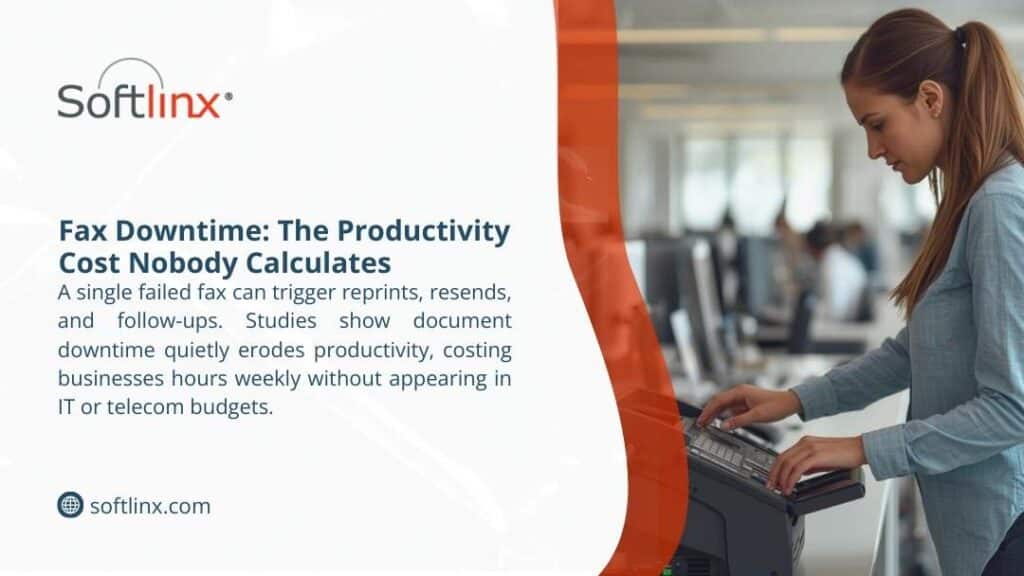
A traditional fax machine rarely stays a one-time purchase. Most businesses underestimate how much a fax machine costs once the full lifecycle comes into view. Hardware prices vary, but maintenance never truly stops. Replacement parts, routine service calls, toner, and paper quietly increase the fax machine cost year after year.
Energy use adds another layer. According to the report, office equipment left powered on outside business hours continues to draw electricity, creating unnecessary power consumption that often goes unnoticed. Older fax machines, in particular, lack modern energy controls, which makes idle usage yet another hidden drain tied to outdated systems.
| Fax Equipment Expense | Typical Ongoing Impact |
| Dedicated fax machine | Maintenance and repair cycles |
| Toner and paper | Continuous replenishment |
| Power usage | Idle energy draw |
Once these recurring expenses surface in annual reviews, many organizations begin to understand why faxing is so expensive, even when fax volume remains steady.
Dedicated Fax Lines: The Cost That Never Stops
Fax line cost remains one of the most persistent hidden expenses. Unlike internet-based systems, traditional faxing depends on analog connectivity. That means a business pays for a line even if fax volume drops.
Many organizations still ask, How much does a fax line cost? The answer varies, but averages remain stubbornly high. According to pricing data, business analog lines routinely exceed $30 per month before taxes and fees. Over five years, that single fax line quietly exceeds the cost of the fax machine itself.
Paper, Toner, and Storage: The Fax Cost Nobody Tracks
Faxing consumes paper whether recipients want it or not. Toner cartridges for fax machines often cost more per page than modern printers due to lower production volumes. Paper storage becomes another silent drain. Physical filing cabinets occupy office space that carries real rent costs.
A study by Gartner found that organizations spend between 1% and 3% of total annual revenues on document output (including copiers, printers, fax machines, and scanners). Faxing contributes directly to that figure. Those costs rarely appear under fax services in accounting software. They hide inside operational overhead.
Labor Time and Workflow Disruption
Traditional faxing interrupts people. Someone prints a document. Someone walks to the machine. Someone waits. Someone resends when the line fails. Someone files paper afterward. None of that work creates value.
According to the Bureau of Labor Statistics, employer labor compensation costs, including wages and benefits, account for a significant portion of total workplace spending, averaging around $48.05 per hour worked for civilian workers in 2025, with wages alone making up about 702% of that cost.
This highlights how labor expenses, especially in administrative and office support roles, can quickly outweigh equipment or hardware costs in document-heavy environments. This is where the hidden costs of traditional fax become impossible to ignore.
Compliance Exposure and Error-Driven Costs
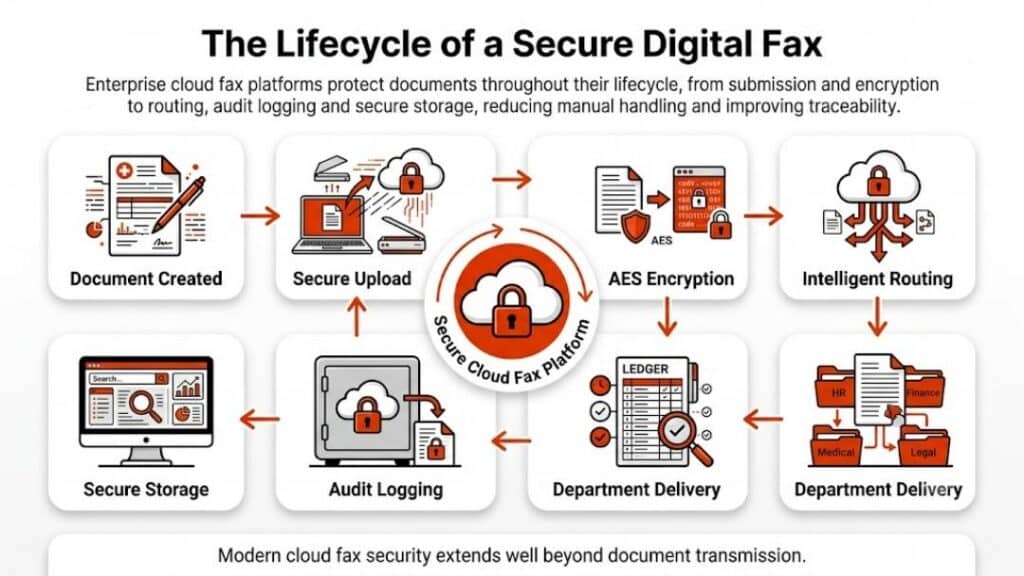
Fax machines do not verify recipients. Misdialed numbers remain a leading cause of document exposure. In healthcare, this matters. Paper left on fax trays exposes sensitive information. Staff re-fax documents multiple times without tracking delivery confirmation. Modern Healthcare Cloud Fax Solutions address many of these challenges through secure routing, delivery tracking, and better document visibility. Each error creates risk, and risk carries cost.
Organizations exploring whether fax is HIPAA compliant often discover that compliance depends entirely on process controls, not on the machine itself. Understanding HIPAA fax requirements matters more than most businesses realize, especially when sensitive information moves daily.
Comparing Traditional Fax Cost vs Digital Alternatives
The table below shows how traditional fax expenses stack up against modern approaches over time.
| Cost Category | Traditional Fax | Digital Fax |
| Fax machine cost | High upfront | None |
| Fax line cost | Monthly recurring | Included |
| Paper and toner | Continuous | None |
| Maintenance | Ongoing | Minimal |
| Compliance risk | High | Reduced |
| Scalability | Limited | Flexible |
Digital fax solutions remove hardware dependency entirely. They rely on centralized fax server infrastructure rather than individual machines, which reduces failure points and administrative burden. Businesses that evaluate a fax server approach often find that cost predictability improves almost immediately.
Retail Fax Services: Why Pay-Per-Page Adds Up
Many people ask, How much does it cost to fax at Staples? or How much does UPS charge to send a fax? Retail fax services look convenient but charge per page, often between $1.50 and $3.00 for local transmissions. UPS fax cost per page increases for long-distance or international destinations.
Over time, these ad-hoc charges rival the cost of owning a dedicated fax machine, without offering security, audit trails, or reliability. Staples fax cost and UPS fax service pricing appeal for emergencies, not for ongoing business operations.
| Retail Fax Provider | Typical Cost Structure |
| Staples fax service | Per-page pricing, domestic and international |
| UPS fax service | Per page plus service fees |
| Local fax store near me | Variable pricing |
What starts as a quick errand often turns into a recurring operational expense, particularly for businesses that send forms, contracts, or multi-page documents on a regular basis.
Total Cost of Ownership: The Metric That Matters
Total cost of ownership captures what traditional fax hides. Hardware, phone lines, labor time, consumables, compliance exposure, and opportunity loss belong in the same calculation.
| Cost Type | Visible | Hidden |
| Hardware | Yes | No |
| Phone line | Yes | Sometimes |
| Paper and toner | Sometimes | Yes |
| Labor time | No | Yes |
| Compliance exposure | No | Yes |
When organizations evaluate fax cost honestly, the math changes.
Why Businesses Move Away from Traditional Fax
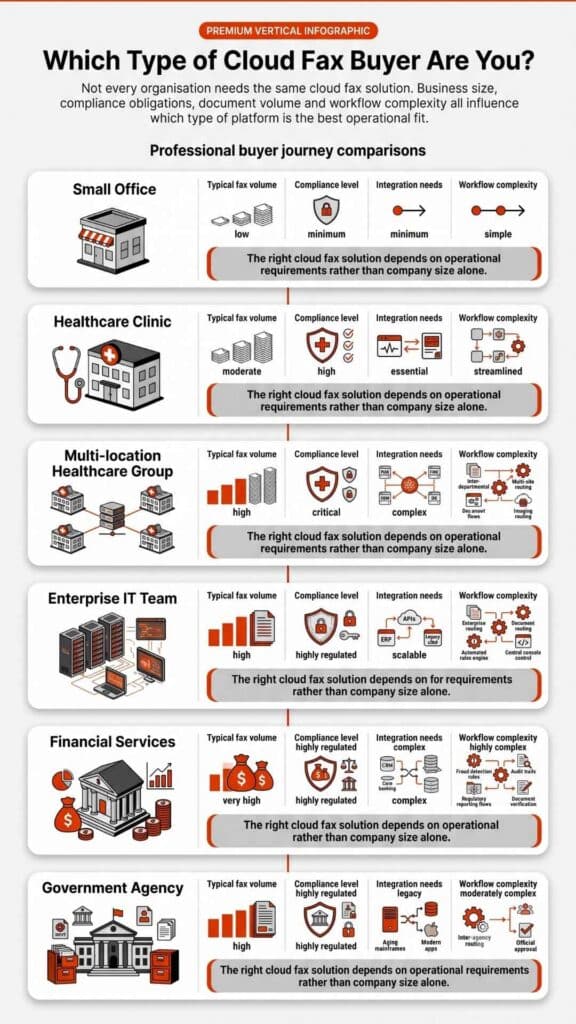
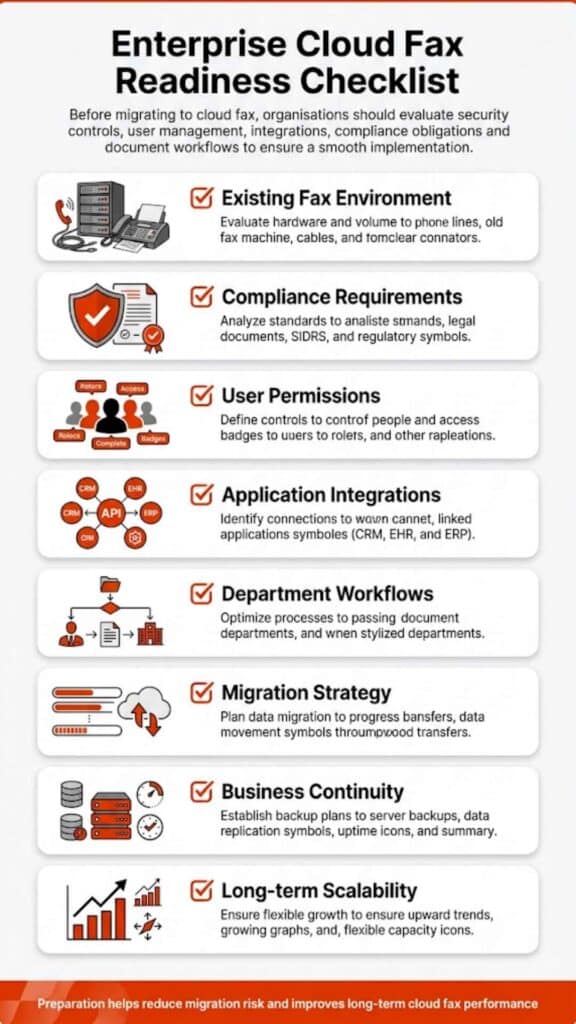
Traditional faxing persists because it feels familiar. But familiarity does not equal efficiency. Cloud-based fax delivery allows organizations to send and receive faxes through the internet, removing analog dependencies entirely. Businesses that explore cloud fax infrastructure often discover fewer errors, clearer audit trails, and reduced administrative load.
Healthcare organizations frequently integrate fax directly into EHR systems to eliminate manual routing and scanning. Learning how to connect fax to EHR platforms reduces handling errors while supporting regulatory compliance.
Conclusion
The hidden costs of traditional fax rarely appear in procurement discussions. They surface later, inside support tickets, billing statements, and compliance reviews. Organizations that calculate fax cost beyond hardware begin to question why outdated systems remain in place.
This might work for you if your business sends only a handful of faxes per year. But for regulated industries, high-volume environments, or teams handling sensitive information, traditional fax becomes one of the most expensive legacy habits still in use.
Understanding the full cost picture helps leaders decide whether maintaining analog fax infrastructure still makes sense or whether modern fax solutions align better with operational reality.
If reducing recurring overhead, improving document security, and regaining staff time matter, examining alternatives becomes less about technology and more about accountability. Traditional faxing doesn’t just slow work down; it locks organizations into ongoing risk and inefficiency. Softlinx provides secure, enterprise-grade cloud fax built for regulated environments that still rely on fax to move critical information.
Hidden Costs of Traditional Fax: Most Businesses Still Overlook
The hidden costs of traditional fax rarely show up on invoices. Hardware looks cheap. Fax services appear simple. But once phone lines, labor time, compliance exposure, and workflow friction enter the picture, fax cost balloons quietly.
This article breaks down what businesses actually pay to send and receive faxes, and why those costs persist long after the machine is installed.
Hidden Costs of Traditional Fax: What the Invoice Never Shows
The hidden costs of traditional fax begin the moment a business commits to a dedicated fax machine. At first glance, faxing seems inexpensive. A device sits in the corner. A fax number exists. Documents move. But here’s the problem. Traditional faxing spreads its costs across hardware, infrastructure, labor, and risk. None of it looks dramatic on its own. Together, it adds up quickly.
Fax machines require more than electricity and paper. They rely on an analog infrastructure that modern offices no longer use for anything else. A dedicated phone line exists solely for fax transmission, often costing between $25 and $50 per month, depending on the carrier.
The analog business line pricing has steadily increased as telecom providers shift away from copper networks, making fax line costs a long-term liability rather than a fixed expense. That line does nothing when documents aren’t moving. Yet the bill arrives every month.
The Real Cost of Fax Machines and Hardware Ownership
A fax machine cost looks manageable at checkout. Entry-level units sell for a few hundred dollars. Enterprise models climb much higher. But the purchase price tells only part of the story. Traditional fax machines age fast. Mechanical parts fail. Rollers wear out. Toner dries up. Replacement parts grow scarce. According to Total Cost of Ownership research and IDC’s analysis of IT hardware maintenance costs, the full lifecycle expenses of office hardware, including repairs, service, downtime, and support, often rival or exceed the original purchase price over a typical 5-year period. This creates a rolling cost cycle that never truly ends.
Equipment Costs That Never Really End
A traditional fax machine rarely stays a one-time purchase. Most businesses underestimate how much a fax machine costs once the full lifecycle comes into view. Hardware prices vary, but maintenance never truly stops. Replacement parts, routine service calls, toner, and paper quietly increase the fax machine cost year after year.
Energy use adds another layer. According to the report, office equipment left powered on outside business hours continues to draw electricity, creating unnecessary power consumption that often goes unnoticed. Older fax machines, in particular, lack modern energy controls, which makes idle usage yet another hidden drain tied to outdated systems.
| Fax Equipment Expense | Typical Ongoing Impact |
| Dedicated fax machine | Maintenance and repair cycles |
| Toner and paper | Continuous replenishment |
| Power usage | Idle energy draw |
Once these recurring expenses surface in annual reviews, many organizations begin to understand why faxing is so expensive, even when fax volume remains steady.
Dedicated Fax Lines: The Cost That Never Stops
Fax line cost remains one of the most persistent hidden expenses. Unlike internet-based systems, traditional faxing depends on analog connectivity. That means a business pays for a line even if fax volume drops.
Many organizations still ask, How much does a fax line cost? The answer varies, but averages remain stubbornly high. According to pricing data, business analog lines routinely exceed $30 per month before taxes and fees. Over five years, that single fax line quietly exceeds the cost of the fax machine itself.
Paper, Toner, and Storage: The Fax Cost Nobody Tracks
Faxing consumes paper whether recipients want it or not. Toner cartridges for fax machines often cost more per page than modern printers due to lower production volumes. Paper storage becomes another silent drain. Physical filing cabinets occupy office space that carries real rent costs.
A study by Gartner found that organizations spend between 1% and 3% of total annual revenues on document output (including copiers, printers, fax machines, and scanners). Faxing contributes directly to that figure. Those costs rarely appear under fax services in accounting software. They hide inside operational overhead.
Labor Time and Workflow Disruption
Traditional faxing interrupts people. Someone prints a document. Someone walks to the machine. Someone waits. Someone resends when the line fails. Someone files paper afterward. None of that work creates value.
According to the Bureau of Labor Statistics, employer labor compensation costs, including wages and benefits, account for a significant portion of total workplace spending, averaging around $48.05 per hour worked for civilian workers in 2025, with wages alone making up about 702% of that cost.
This highlights how labor expenses, especially in administrative and office support roles, can quickly outweigh equipment or hardware costs in document-heavy environments. This is where the hidden costs of traditional fax become impossible to ignore.
Compliance Exposure and Error-Driven Costs
Fax machines do not verify recipients. Misdialed numbers remain a leading cause of document exposure. In healthcare, this matters. Paper left on fax trays exposes sensitive information. Staff re-fax documents multiple times without tracking delivery confirmation. Each error creates risk. Risk carries cost.
Organizations exploring whether fax is HIPAA compliant often discover that compliance depends entirely on process controls, not on the machine itself. Understanding HIPAA fax requirements matters more than most businesses realize, especially when sensitive information moves daily.
Comparing Traditional Fax Cost vs Digital Alternatives
The table below shows how traditional fax expenses stack up against modern approaches over time.
| Cost Category | Traditional Fax | Digital Fax |
| Fax machine cost | High upfront | None |
| Fax line cost | Monthly recurring | Included |
| Paper and toner | Continuous | None |
| Maintenance | Ongoing | Minimal |
| Compliance risk | High | Reduced |
| Scalability | Limited | Flexible |
Digital fax solutions remove hardware dependency entirely. They rely on centralized fax server infrastructure rather than individual machines, which reduces failure points and administrative burden. Businesses that evaluate a fax server approach often find that cost predictability improves almost immediately.
Retail Fax Services: Why Pay-Per-Page Adds Up
Many people ask, How much does it cost to fax at Staples? or How much does UPS charge to send a fax? Retail fax services look convenient but charge per page, often between $1.50 and $3.00 for local transmissions. UPS fax cost per page increases for long-distance or international destinations.
Over time, these ad-hoc charges rival the cost of owning a dedicated fax machine, without offering security, audit trails, or reliability. Staples fax cost and UPS fax service pricing appeal for emergencies, not for ongoing business operations.
| Retail Fax Provider | Typical Cost Structure |
| Staples fax service | Per-page pricing, domestic and international |
| UPS fax service | Per page plus service fees |
| Local fax store near me | Variable pricing |
What starts as a quick errand often turns into a recurring operational expense, particularly for businesses that send forms, contracts, or multi-page documents on a regular basis.
Total Cost of Ownership: The Metric That Matters
Total cost of ownership captures what traditional fax hides. Hardware, phone lines, labor time, consumables, compliance exposure, and opportunity loss belong in the same calculation.
| Cost Type | Visible | Hidden |
| Hardware | Yes | No |
| Phone line | Yes | Sometimes |
| Paper and toner | Sometimes | Yes |
| Labor time | No | Yes |
| Compliance exposure | No | Yes |
When organizations evaluate fax cost honestly, the math changes.
Why Businesses Move Away from Traditional Fax
Traditional faxing persists because it feels familiar. But familiarity does not equal efficiency. Cloud-based fax delivery allows organizations to send and receive faxes through the internet, removing analog dependencies entirely. Businesses that explore cloud fax infrastructure often discover fewer errors, clearer audit trails, and reduced administrative load.
Healthcare organizations frequently rely on Healthcare Fax Solutions that integrate directly with EHR systems to eliminate manual routing and scanning. Learning how to connect fax to EHR platforms reduces handling errors while supporting regulatory compliance.
Conclusion
The hidden costs of traditional fax rarely appear in procurement discussions. They surface later, inside support tickets, billing statements, and compliance reviews. Organizations that calculate fax cost beyond hardware begin to question why outdated systems remain in place.
This might work for you if your business sends only a handful of faxes per year. But for regulated industries, high-volume environments, or teams handling sensitive information, traditional fax becomes one of the most expensive legacy habits still in use.
Understanding the full cost picture helps leaders decide whether maintaining analog fax infrastructure still makes sense or whether modern fax solutions align better with operational reality.
If reducing recurring overhead, improving document security, and regaining staff time matter, examining alternatives becomes less about technology and more about accountability.
Traditional faxing doesn’t just slow work down; it locks organizations into ongoing risk and inefficiency. Softlinx provides secure, enterprise-grade cloud fax built for regulated environments that still rely on fax to move critical information.