Fax hasn’t disappeared. In fact, in healthcare, finance, and government environments, it still handles a large share of sensitive document exchange. That continued reliance is especially visible in healthcare: an MGMA Stat poll found that 89% of healthcare leaders said their organization uses a fax machine, which helps explain why reducing fax overhead still matters in real-world operations.
The problem isn’t the fax itself; it’s how it’s managed. Older systems quietly introduce delays, manual effort, and compliance concerns. This article explains how to reduce faxing overhead by shifting how fax communication operates, without forcing organizations to abandon the workflows they depend on.
How to Reduce Faxing Overhead in Modern Business Environments
Ask any operations team where time disappears, and fax rarely shows up at the top of the list. Yet it’s often sitting in the background, slowing processes, creating bottlenecks, and requiring constant attention. That’s usually where the issue starts.
Understanding how to reduce faxing overhead begins with recognizing that fax remains part of mission-critical communication. It’s still used to exchange health information, process insurance documents, and move regulated data between systems that don’t always speak the same language. Healthcare Cloud Fax Solutions help modernize these workflows by improving security, efficiency, and document accessibility.
But here’s the problem. Most organizations still rely on workflows built around traditional fax machines. Those workflows weren’t designed for real-time operations or integrated environments. So instead of supporting efficiency, they quietly work against it.
The Hidden Costs of Traditional Fax Systems
The following are the hidden costs of a traditional fax system.
Infrastructure Expenses and Maintenance Burden
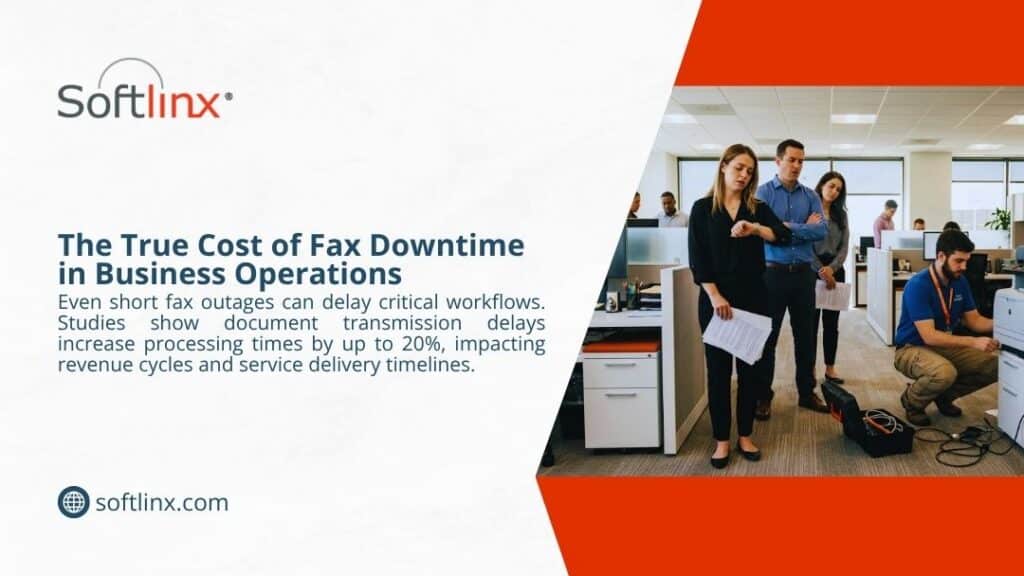
Traditional fax machines come with a footprint that extends beyond the device itself. There are dedicated phone lines, hardware maintenance, supplies, and the occasional service call when something breaks at the wrong time.
Individually, these costs don’t always raise alarms. Together, they create a steady operational drain. A closer look at the hidden costs of traditional fax often reveals expenses that go unnoticed because they’re spread across departments.
Labor-Intensive Document Processing
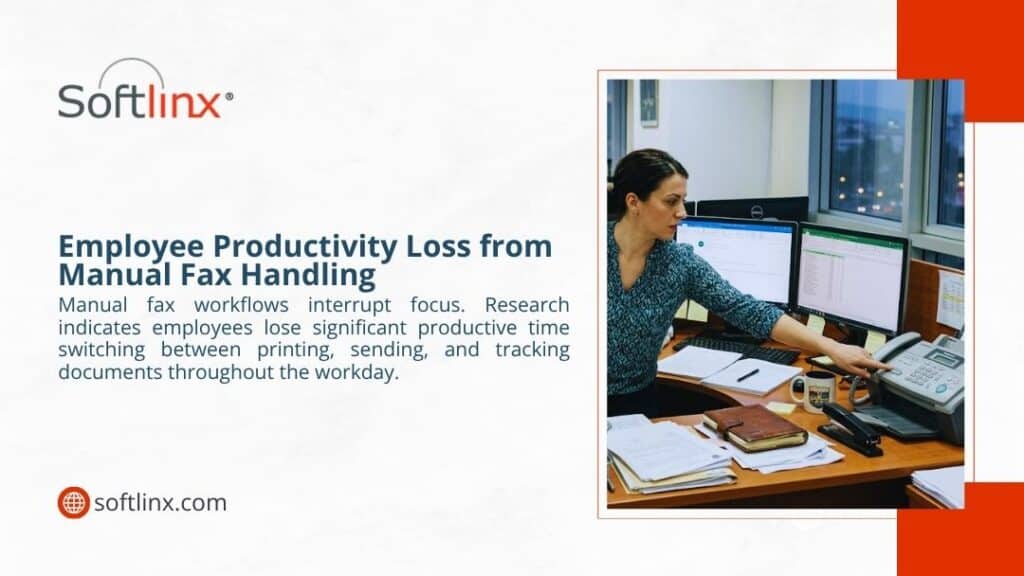
Now consider how documents move through the system. Someone prints a file. Someone dials a number. Someone waits for confirmation. If the line is busy, they try again. If a page fails, they resend. Multiply that by hundreds, or thousands, of faxed documents each week, and the time adds up quickly. And that’s before errors enter the picture.
Compliance Risks in Regulated Industries
In industries like healthcare, fax is still tied to compliance. But the way it’s handled matters more than the method itself. Misdirected faxes, unsecured storage, or incomplete audit trails can create risk. That’s why understanding how to prevent HIPAA violations when faxing medical records has become part of day-to-day operations rather than a one-time checklist.
Traditional Fax vs Cloud Fax Cost Comparison
Before moving forward, it helps to compare how traditional systems and cloud-based approaches differ in day-to-day operations.
| Cost Factor | Traditional Fax Machines | Cloud Fax Service |
| Hardware | Physical equipment required | No hardware |
| Maintenance | Ongoing servicing | Managed remotely |
| Phone Lines | Required | Not needed |
| Labor | Manual handling | Reduced involvement |
| Scalability | Limited | Flexible |
This comparison reflects more than cost differences. It highlights how infrastructure decisions shape operational efficiency.
What Is a Digital Fax and Why Does It Change Everything
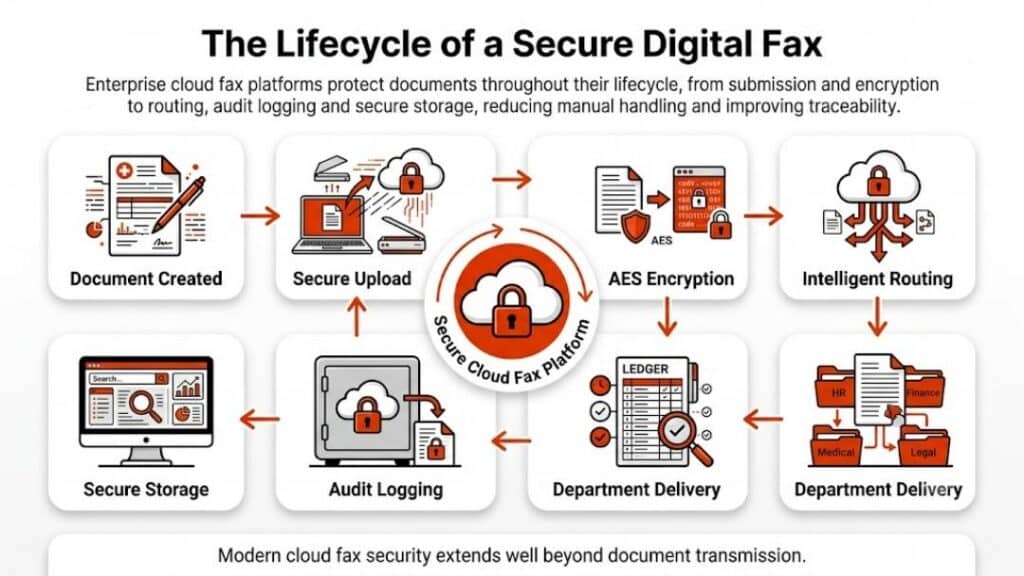
So what is a digital fax, really? At its core, it’s still fax communication, but without the physical layer. Documents move through secure internet-based systems instead of phone lines. This is where terms like virtual fax or online faxing come into play.
A secure online fax setup allows users to send and receive faxed documents through email, applications, or web portals. No printing. No dialing. No waiting by a machine.
For organizations transitioning from older systems, exploring a cloud fax environment often marks the point where fax stops being a bottleneck and starts fitting into modern workflows.
How Cloud Fax Technologies Reduce Operational Overhead
The shift from traditional fax to cloud-based systems changes how documents move, how systems interact, and how teams operate.
Eliminating Physical Infrastructure
One of the most immediate changes comes from removing physical dependencies. No fax machines. No dedicated phone lines. No maintenance schedules. For organizations still comparing options, understanding a fax server setup versus a cloud-based model often highlights how much infrastructure can be simplified.
Centralized Document Management
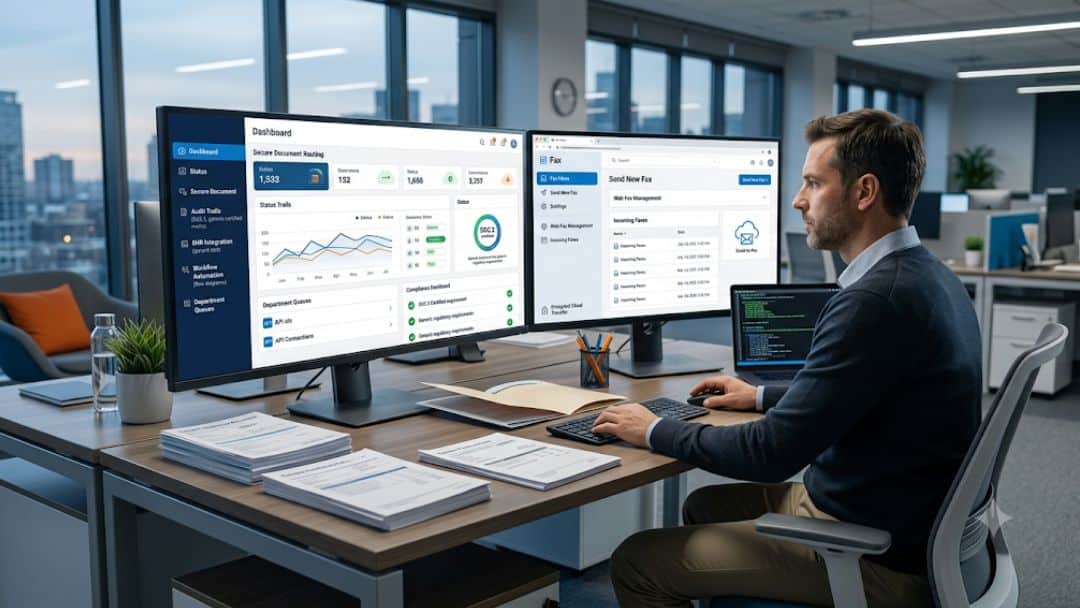
Instead of paper trails, documents are stored digitally. That changes how teams access, track, and manage information. Audit trails become easier to maintain. Retrieval becomes faster. And document management shifts from reactive to structured.
Real-Time Fax Communication
With cloud fax technologies, transmission doesn’t rely on the availability of lines or physical devices. Documents move in real time, and delivery status is visible immediately. That removes a layer of uncertainty that traditional fax systems often introduce.
Operational Efficiency Gains with Cloud Fax
When workflows shift to cloud-based systems, the operational impact becomes more visible.
| Workflow Element | Legacy Fax Systems | Cloud Fax Technologies |
| Routing | Manual sorting | Automated |
| Tracking | Limited | Real-time visibility |
| Storage | Paper-based | Digital |
| Error Rate | Higher | Lower |
These changes are not limited to speed. They affect accuracy, accountability, and overall process reliability.
Automating Fax Workflows to Reduce Overhead
Automation addresses one of the biggest contributors to overhead: manual handling.
Automating the Routing of Incoming Faxes
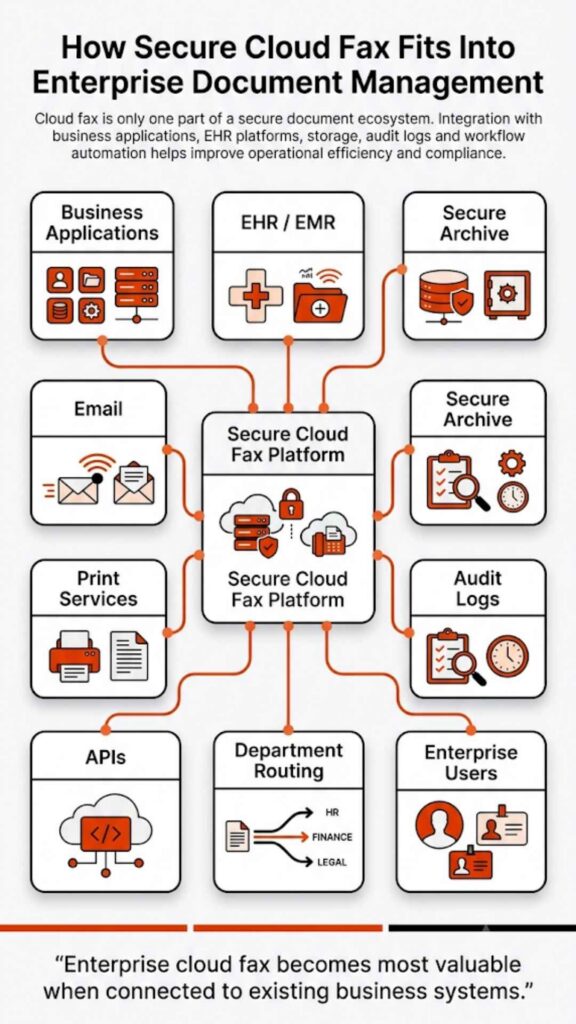
Manual sorting slows everything down. Automation changes that. Instead of someone reviewing each incoming fax, systems can route documents based on predefined rules. A structured approach to automating incoming fax routing reduces delays and keeps documents moving where they need to go.
API-Based Fax Integration
This is where things start to scale. APIs allow fax systems to connect directly with business applications. That means documents don’t just arrive; they flow into workflows automatically. Organizations looking into cloud fax APIs for bulk and broadcast faxing often do so because manual processes can’t keep up with volume.
Reducing Human Intervention
Less manual input usually means fewer errors. It also means fewer delays. When systems handle repetitive steps, staff can focus on exceptions instead of routine processing.
Integrating Fax with Business Systems and EHR Platforms
Integration plays a central role in reducing fax overhead, especially in healthcare environments.
Connecting Fax to Electronic Health Records
Healthcare workflows depend heavily on electronic health records. When fax operates outside those systems, inefficiencies appear. Integration changes that. Understanding how to connect a fax to EHR helps align document flow with clinical workflows.
Improving Fax Interoperability in Healthcare
Interoperability has become a requirement rather than a goal. The Office of the National Coordinator for Health Information Technology reported that, by 2023, between 78% and 92% of hospitals said they at least sometimes engaged in each core interoperability domain, find, send, receive, and integrate, showing how strongly healthcare workflows now depend on connected information exchange.
Systems need to exchange data reliably, even when they weren’t designed to work together. Understanding fax interoperability in healthcare shows how modern faxing solutions support that exchange.
Streamlining Insurance and Claims Faxing
Insurance processes often involve large volumes of documents moving between organizations. Integrated faxing reduces delays and keeps processing consistent.
Secure Online Fax and Compliance Considerations
Compliance remains one of the most critical aspects of fax communication, especially in healthcare and financial sectors.
Is Fax HIPAA Compliant in 2026?
Fax can meet compliance standards, but only when proper safeguards are in place. The question of whether fax is HIPAA compliant depends on encryption, access controls, and monitoring capabilities.
Features of HIPAA Compliant Fax Services
Modern systems include encryption during transmission and storage, role-based access controls, and detailed audit trails. That approach lines up with HHS guidance on the HIPAA Security Rule, which requires regulated entities to apply administrative, physical, and technical safeguards to protect electronic protected health information. These features help organizations maintain consistent compliance across workflows.
Organizations relying on HIPAA-compliant fax services benefit from built-in safeguards that reduce risk without complicating operations.
Protecting Health Information During Transmission
Protecting health information involves more than secure transmission. It requires visibility into who accessed data, when it was accessed, and how it was handled. Cloud fax technologies provide this level of oversight.
Compliance Comparison
| Feature | Traditional Fax | Cloud Fax Solution |
| Encryption | Limited | Advanced |
| Audit Trails | Basic | Detailed |
| Access Control | Minimal | Role-based |
| Compliance Support | Manual | Built-in |
How to Reduce Fax Errors and Improve Accuracy
Errors in fax communication often stem from small issues that compound over time. Incorrect fax numbers, incomplete documents, and failed transmissions all contribute to inefficiencies.
Reducing these errors requires both process improvements and technology support. Systems that validate fax numbers, confirm delivery, and track document status reduce uncertainty.
A closer review of how to reduce fax errors shows that automation plays a key role in maintaining accuracy, especially in high-volume environments where manual oversight becomes difficult.
Managing High-Volume Faxing Without Increasing Costs
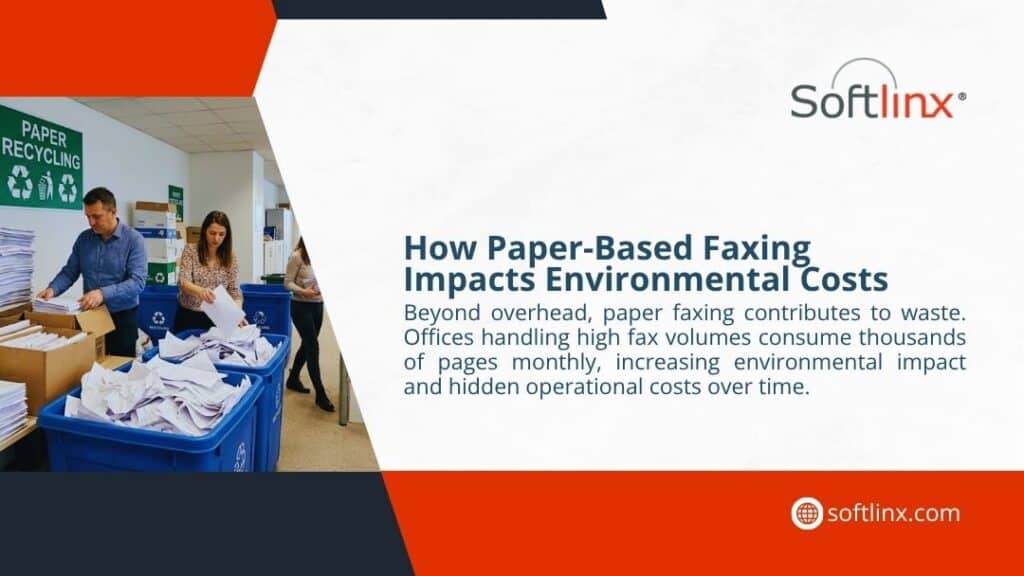
Handling large volumes of faxed documents presents a unique challenge. Traditional systems often require additional hardware and staff as volume increases.
Cloud-based solutions approach this differently. They scale without requiring additional infrastructure, allowing organizations to manage demand more efficiently.
Managing high-volume faxes in healthcare demonstrates how organizations maintain performance while keeping operational demands stable. Real-time monitoring, automated routing, and centralized management all contribute to handling volume without increasing overhead.
How to Switch from Legacy Fax to Cloud Fax Without Disruption
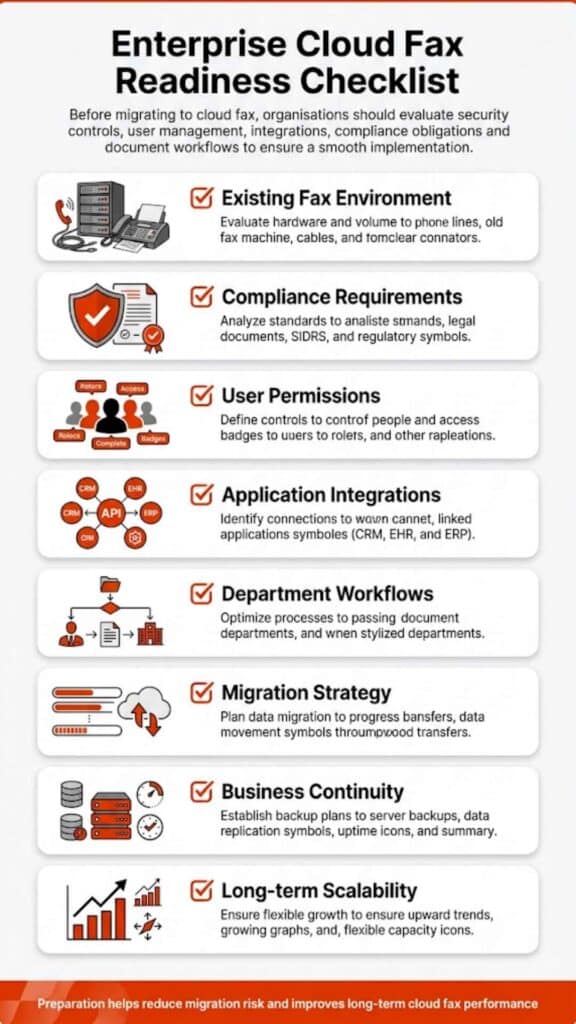
Transitioning from traditional fax systems does not require immediate replacement. Many organizations adopt a phased approach.
Transition Strategy: A full replacement isn’t always necessary. Many organizations move in stages, maintaining existing workflows while gradually introducing new systems.
Retaining Existing Fax Numbers: Keeping existing fax numbers is often possible. Businesses can review whether existing fax numbers can be retained during migration.
Understanding On-Premise vs Cloud Fax: Choosing the right model requires understanding trade-offs. An on premise vs cloud fax comparison can help clarify the differences.
Benefits of Cloud Fax for Long-Term Cost Control
Cloud fax technologies influence cost control by changing how resources are used rather than simply reducing expenses.
| Operational Area | Traditional Fax Impact | Cloud Fax Impact |
| Resource Allocation | Distributed and manual | Centralized and controlled |
| Maintenance Effort | Ongoing | Minimal |
| Document Handling | Labor-intensive | Streamlined |
| Scalability | Limited | Flexible |
| Visibility | Fragmented | Unified |
These improvements often support better planning, improved workflow consistency, and reduced operational strain over time.
Industry-Specific Use Cases for Reducing Fax Overhead
Healthcare Organizations
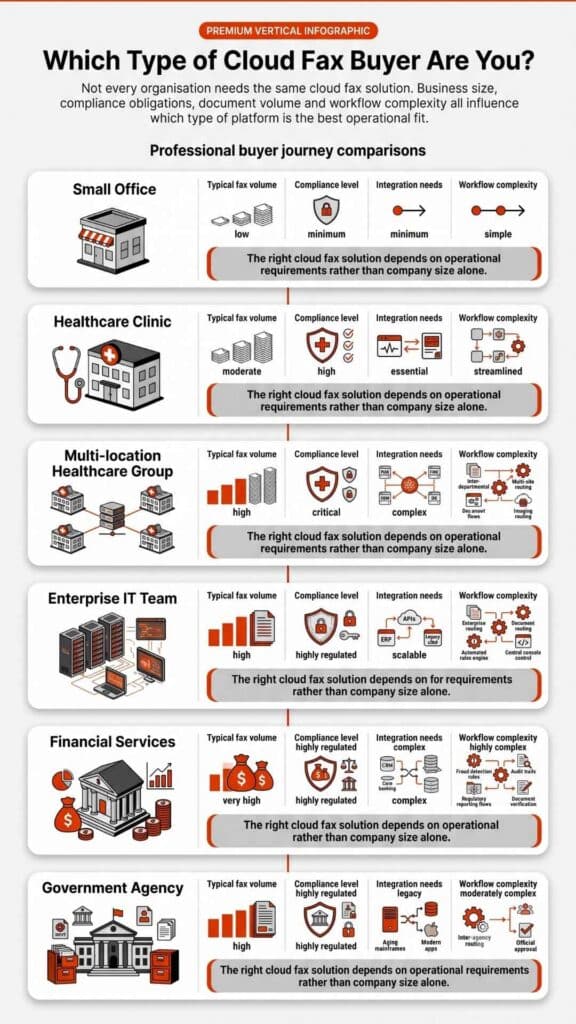
Healthcare environments depend on fax for patient records, referrals, and coordination between providers. Solutions such as hospital cloud fax systems and Healthcare Fax Solutions help reduce administrative workload while supporting compliance requirements.
Financial and Insurance Institutions
Financial organizations rely on secure document exchange. Cloud fax systems provide controlled environments that align with regulatory expectations while improving efficiency.
Government and Education
Public sector organizations often deal with strict documentation requirements. Modern fax solutions help manage large volumes of documents while maintaining compliance standards.
FAQs
What is the fastest way to reduce faxing overhead?
The fastest improvement usually comes from removing manual steps. Moving to a cloud fax service and automating document routing reduces delays immediately.
Do I need new equipment for digital faxing?
No. Digital faxing works through existing devices such as computers or integrated systems, without dedicated hardware.
How does virtual fax improve document management?
Virtual fax allows documents to be stored, organized, and accessed digitally, which reduces manual filing and improves retrieval speed.
How to stop receiving unwanted faxes?
Unwanted faxes can be reduced by controlling who can send to your fax number and how inbound traffic is managed. With older fax setups, that often means manual blocking or telecom-level changes. With a cloud fax platform, administrators can apply routing rules, restrict unknown senders, and direct inbound fax traffic more precisely. That helps reduce spam without interrupting legitimate business fax communication.
What must never be sent by fax?
Sensitive information should never be sent by fax unless the system is secure and appropriate controls are in place. That includes protected health information, financial records, passwords, payment details, and other confidential documents sent through unsecured workflows. In regulated environments, documents should only move through secure, monitored fax systems with access controls and audit trails.
What has replaced faxing?
Faxing has not been fully replaced in industries that still depend on secure, documented information exchange. What has changed is the delivery method. Cloud fax technologies, secure digital workflows, encrypted file exchange, and system integrations now handle many of the functions once tied to traditional fax machines. In healthcare, finance, and government, fax often remains part of the workflow, but the infrastructure behind it has become more modern.
Which countries still use fax?
Fax is still used in several countries, especially in sectors with strict documentation and compliance requirements. The United States, Germany, Japan, and other parts of Europe continue to use fax in healthcare, legal, government, and financial workflows. Usage levels vary by industry, but fax remains active where reliability, formal records, and legacy interoperability still matter.
Who is the cheapest to fax?
The lowest-cost fax option depends on the full operating model, not just the monthly service fee. Traditional fax machines carry costs tied to hardware, maintenance, paper, toner, and phone lines. Cloud fax services often reduce those overhead costs by removing physical infrastructure and simplifying administration. For business users, the better question is usually which fax solution delivers the best operational value, security, and reliability.
Why is faxing safer than email?
Faxing can be safer than email in certain regulated workflows because it offers a more controlled transmission path, especially when used through a secure cloud fax platform. Email can be exposed to phishing, misdelivery, and forwarding risks. Secure fax systems can provide direct delivery, access controls, transmission records, and audit trails, which help organizations protect sensitive information and support compliance requirements.
Is virtual fax secure for healthcare use?
When implemented correctly with encryption and access controls, virtual fax solutions can meet healthcare compliance requirements.
Can existing fax numbers be used with cloud fax?
In most cases, organizations can retain their existing fax numbers during the transition.
Modernizing Fax Without Disrupting What Works
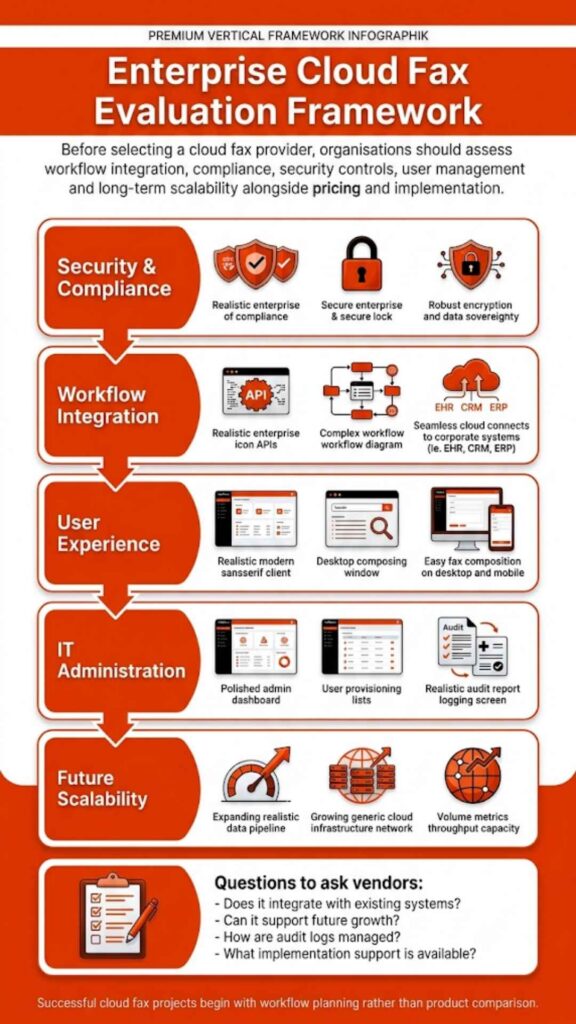
Reducing faxing overhead does not require abandoning fax. It requires changing how it operates within the organization.
When fax becomes part of a connected system, integrated with workflows, supported by automation, and aligned with compliance, it stops creating friction. Instead, it supports efficiency.
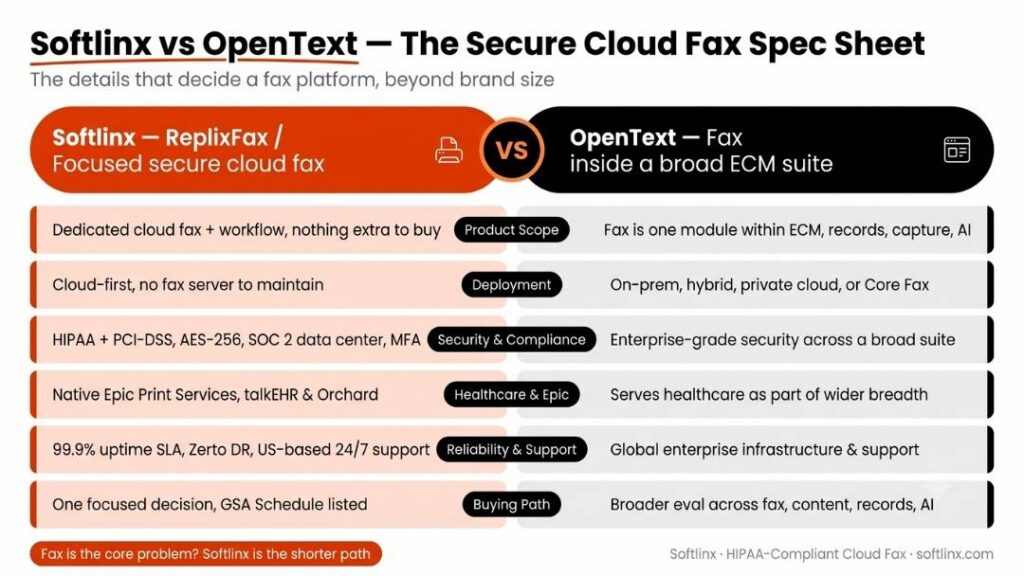
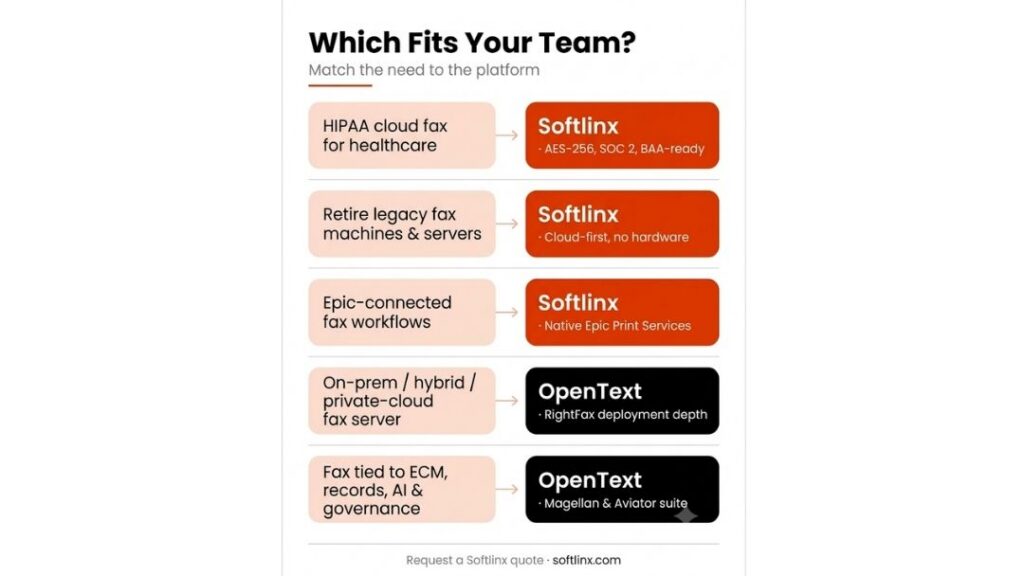
For organizations evaluating next steps, solutions built around secure cloud fax, integration, and workflow automation, like those offered by Softlinx, can provide a practical path forward without disrupting existing operations.