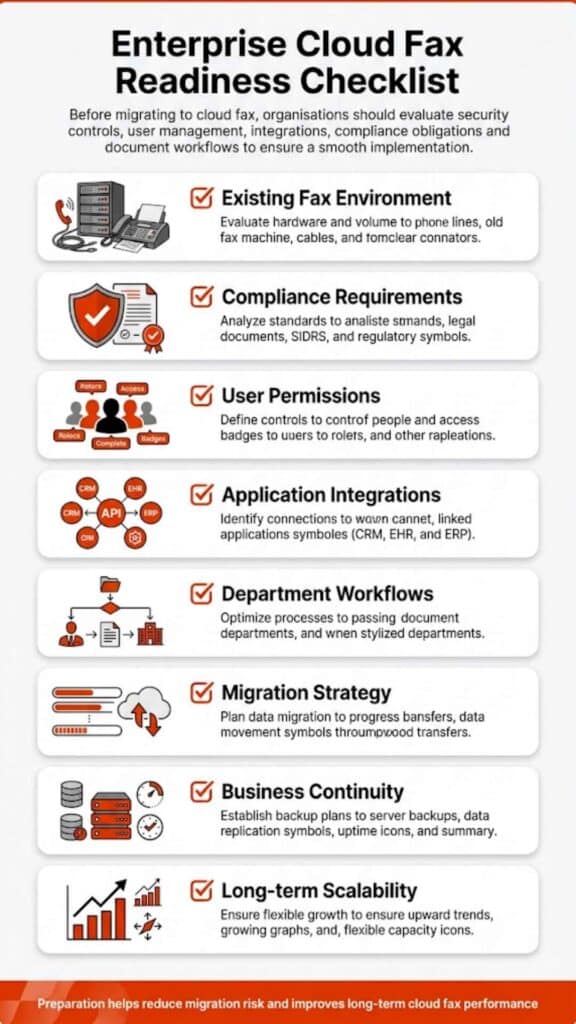
High-volume faxing used to mean one thing: delays. Either the line was busy, or someone was waiting for documents to go through one by one. That’s no longer how it works.
Cloud fax changed the structure entirely. Instead of depending on physical lines or machines, it routes documents through a secure infrastructure built for scale. So yes, if you’re wondering, can cloud fax handle high volume sending? It can, and in most cases, it handles it far better than legacy systems ever could.
Can Cloud Fax Handle High Volume Sending?
Yes, and not just in theory, but in day-to-day operations across industries that rely heavily on document exchange. Traditional faxing has a built-in limitation: it moves one document per line at a time. Add more volume, and things slow down. Add urgency, and things break. That’s where cloud fax steps in.
Instead of sending faxes sequentially, cloud systems distribute them. Multiple transmissions happen at once. No waiting, no stacked queues sitting on a single machine, no busy signals blocking progress.
Here’s what I’ve seen across organizations: once they switch, the question isn’t whether cloud fax can handle volume; it’s why they didn’t move earlier.
What Is Cloud Fax and How It Works in High Volume Environments
If you strip it down, cloud fax is simply fax communication over the internet. No physical fax machines. No dedicated phone lines.
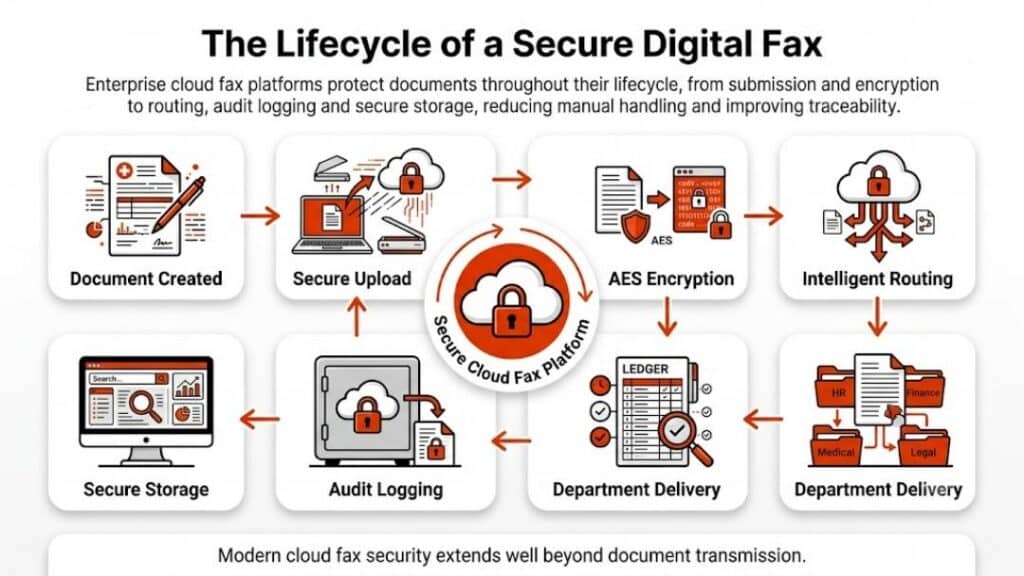
A user uploads a fax document, maybe through email, maybe through a web portal, and the system handles the rest. It routes the document, processes it, and delivers it to the recipient’s fax number using digital infrastructure.
Now, here’s where high volume changes the picture. Instead of relying on one device, cloud fax systems operate inside distributed data centers. That means sending faxes isn’t tied to a single point of failure. When demand spikes, the system doesn’t stall; it adapts. And that’s the key difference. Traditional faxing reacts to load. Cloud fax absorbs it.
How Cloud Fax Handles High Volume Fax Workflows
High-volume faxing isn’t just about sending more documents. It’s about how those documents move. Older setups rely on linear processing. One job finishes, then the next begins. That works, until it doesn’t.
Cloud fax works differently. Healthcare Cloud Fax Solutions help organizations split workloads and manage transmissions more efficiently. Instead of waiting in line, transmissions can happen in parallel, allowing hundreds or even thousands of documents to be processed depending on the setup.
There’s also queue management happening behind the scenes. Documents don’t pile up randomly. They’re distributed intelligently across available capacity. That keeps delivery consistent, even during peak demand.
And then there’s automation. Many organizations don’t manually send each fax anymore. They connect systems using APIs. Through solutions like bulk and broadcast fax APIs, entire batches move automatically from one system to another.
So what you end up with isn’t just faster faxing. It’s a workflow that runs without constant oversight.
Cloud Fax vs Traditional Faxing for High Volume Sending
The contrast becomes obvious when volume increases.
| Feature | Traditional Faxing | Cloud Fax |
| Transmission flow | One at a time | Multiple at once |
| Infrastructure | Physical fax machines | Cloud-based systems |
| Busy signals | Common | Rarely occur |
| Scalability | Limited | Expands automatically |
| Workflow integration | Minimal | Built for integration |
Traditional fax machines were never designed for scale. They were designed for occasional use. Cloud fax, on the other hand, was built with volume in mind.
Real-World Use Cases of High Volume Fax Sending
This isn’t theoretical. High volume faxing happens every day.
Healthcare is the clearest example. Patient records, referrals, and lab results these documents move constantly. Systems like managing high volume faxes in healthcare exist for a reason. Without automation, the workload becomes unmanageable.
Insurance companies process claims in bulk. Financial institutions send compliance documents across departments. Government agencies distribute official records at scale.
In all of these environments, speed matters, but consistency matters more. Cloud fax delivers both.
Benefits of Cloud Fax for High Volume Sending
When volume increases, inefficiencies show up quickly. Cloud fax addresses that in a few practical ways.
First, it improves efficiency. Documents move without manual intervention. That alone reduces delays that usually come from handling paperwork.
Second, it enhances security. Data doesn’t sit on machines or paper trays. It moves through controlled systems with encryption and access controls.
Third, it provides visibility. You don’t have to guess whether a fax went through. You can check in real time.
Organizations looking into the broader benefits of cloud fax for businesses often notice the same pattern: fewer interruptions, more predictable workflows.
Security and Compliance in High Volume Fax Communication
Security becomes more critical as volume grows. More documents mean more exposure, unless the system is designed properly.
Cloud fax platforms address this through layered protection. Data is encrypted. Access is restricted. Every transmission leaves a record.
In healthcare, compliance isn’t optional. Tools like HIPAA-compliant fax help ensure sensitive data stays protected. Many organizations also review whether fax is HIPAA-compliant before adopting new systems.
So here’s the takeaway: cloud fax doesn’t just handle volume, it does so while maintaining compliance.
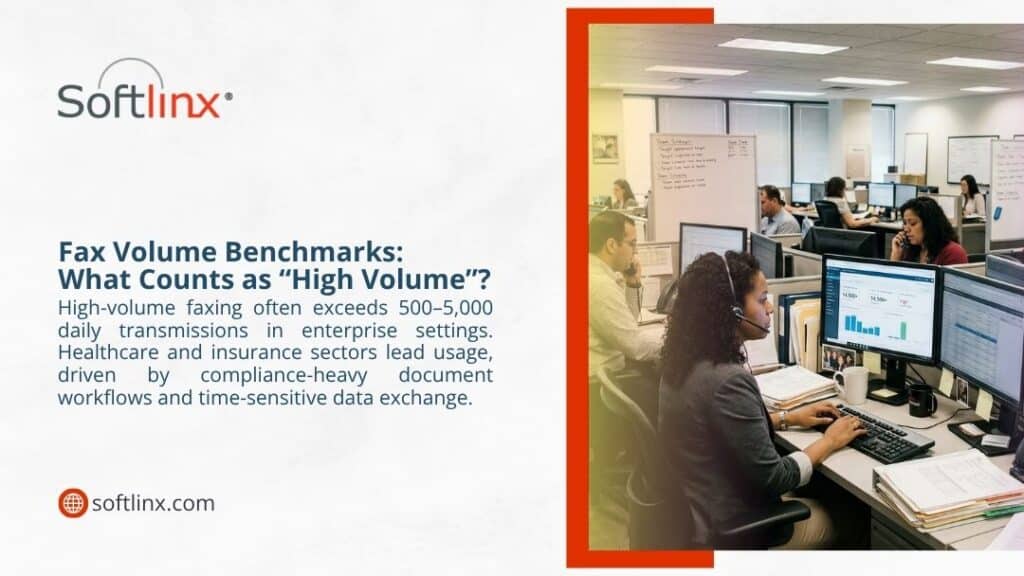
Cloud Fax Infrastructure: Why It Scales Without Breaking
Scaling isn’t magic. It’s architecture.
| Component | Role |
| Data centers | Handle processing |
| Virtual fax servers | Manage routing |
| APIs | Enable automation |
| Cloud storage | Store documents |
| Load balancers | Distribute demand |
Traditional systems require upgrades when demand increases. Cloud fax doesn’t. It adjusts automatically, which is why performance stays stable even during high usage.
Common Challenges in High Volume Faxing (And How Cloud Fixes Them)
When fax volume increases, problems don’t show up gradually, they tend to surface all at once. Systems that worked fine at low volume start breaking under pressure.
One of the first issues is transmission failure. In traditional setups, even a small disruption, a dropped line or weak signal, can interrupt an entire batch. That often leads to retries, delays, and sometimes lost documents. Cloud fax avoids this by rerouting transmissions automatically. If one path fails, another takes over without manual intervention.
Then there’s document routing. In busy environments, faxes often end up in the wrong department or inbox. That creates extra work and, in healthcare settings, increases compliance risks. With cloud fax, routing rules are predefined. Incoming documents are directed based on metadata, sender details, or workflow logic. This is where many organizations see a noticeable shift, especially those trying to streamline operations through automated routing workflows.
Another common issue is visibility. Traditional faxing offers very little insight into what’s happening after a document is sent. Staff are left wondering whether it went through or not. Cloud systems remove that uncertainty. Every fax document has a status, sent, delivered, failed, and it updates in real time.
Capacity limits also create friction. A single fax machine can only process so much at once. Add more volume, and queues build up quickly. Cloud fax distributes that load across multiple channels, so the system doesn’t slow down when demand spikes.
Here’s how those challenges compare in practical terms:
| Challenge | Traditional Faxing | Cloud Fax Approach |
| Transmission failure | Requires manual resend | Automatic rerouting |
| Document routing | Manual sorting | Rule-based automation |
| Status tracking | Limited visibility | Real-time tracking |
| Capacity limits | Fixed by hardware | Dynamically scalable |
| Error handling | Reactive | Preventive controls |
What stands out isn’t just the improvement, it’s the consistency. Once the system stabilizes, these issues stop recurring.
Can Cloud Fax Replace Enterprise Fax Servers Completely?
In many environments, that transition has already happened. Enterprise fax servers were designed for a different era. They rely on on-site infrastructure, require ongoing maintenance, and need regular upgrades to keep up with demand. As volume grows, so does the complexity of managing those systems. IT teams end up spending more time maintaining infrastructure than improving workflows.
Cloud fax shifts that responsibility away from internal teams. There’s no hardware to maintain, no capacity planning tied to physical limits, and no need to scale infrastructure manually. Everything runs through managed environments that expand as needed.
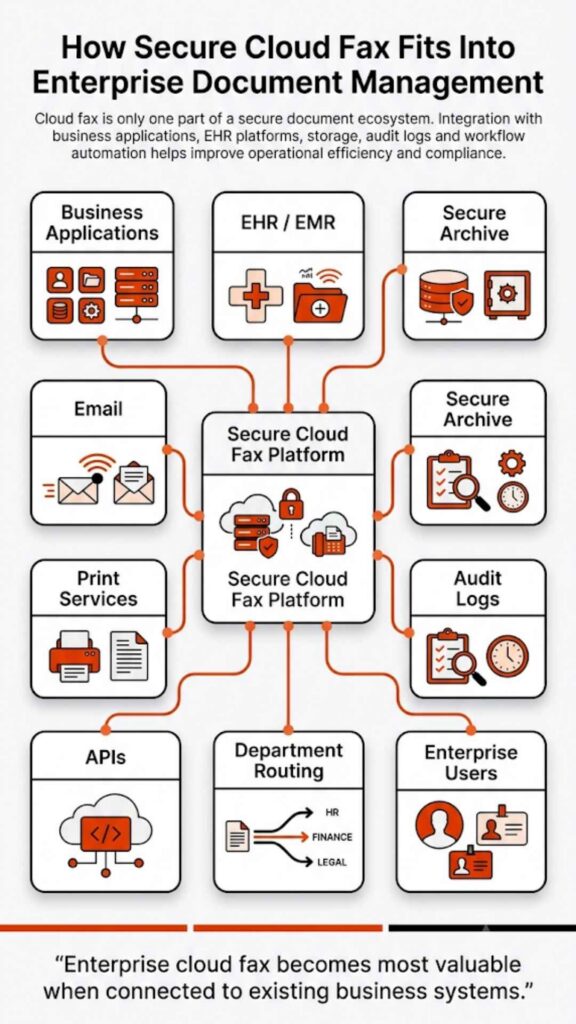
Another factor is integration. Modern organizations rarely operate in isolation. Systems such as EHR platforms, billing applications, and document management tools need to exchange information continuously. Cloud fax platforms are built with that in mind. They integrate directly into existing workflows, rather than sitting outside them.
Security also becomes easier to manage. Instead of securing multiple devices or servers, organizations work within centralized systems that apply consistent policies across all transmissions. That reduces gaps and simplifies compliance efforts.
So while there are still cases where hybrid setups exist, most organizations handling high volume communication find that cloud fax can replace enterprise fax servers without sacrificing performance or control.
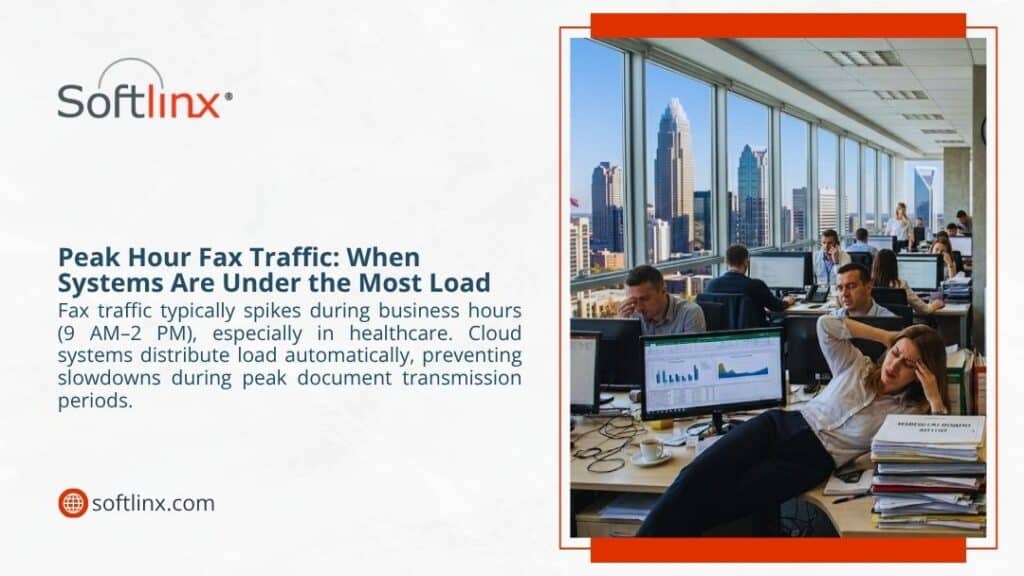
How to Choose the Right Cloud Fax Solution for High Volume Needs
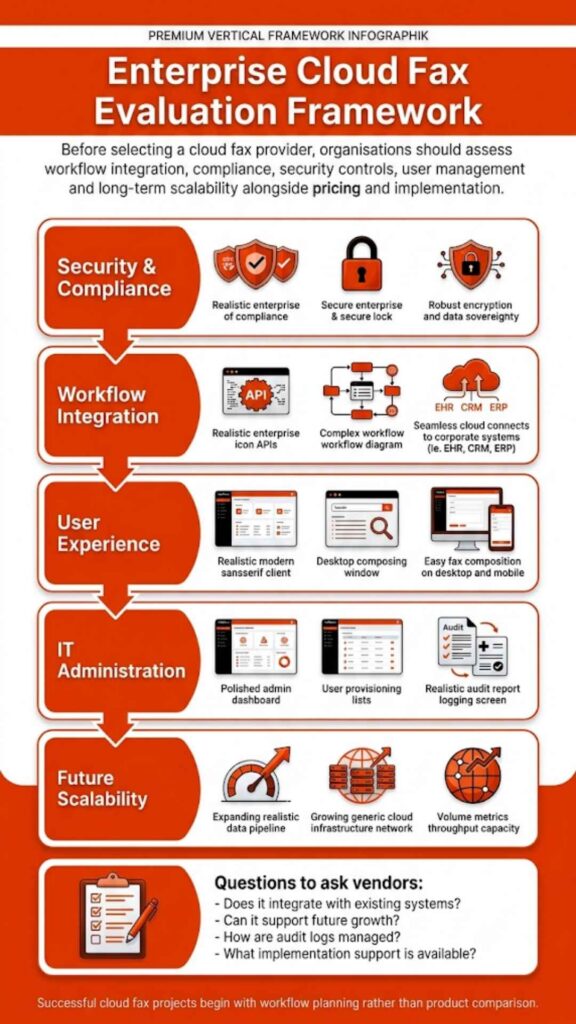
Choosing a cloud fax solution isn’t just about features. It’s about how the system behaves when demand increases.
Reliability comes first. High volume environments don’t allow for downtime. If the system slows or becomes unavailable, operations stall. That’s why uptime guarantees and infrastructure redundancy matter. A solution built on distributed systems will handle spikes more smoothly than one relying on limited capacity.
Then there’s throughput. Some platforms can send large batches, but not all maintain consistent speed. It’s worth looking at how the system processes concurrent transmissions. Does it queue efficiently? Does it scale without delays? These details often separate average solutions from enterprise-ready ones.
Integration should not be overlooked. A cloud fax service should fit into existing workflows without requiring major adjustments. Whether it connects to an EHR system, a CRM, or internal applications, the process should feel seamless rather than forced.
Security and compliance are equally important, especially in regulated industries. Encryption, access control, and audit logging should be standard, not optional.
Support is another factor that tends to get overlooked until something goes wrong. In high volume environments, issues need immediate attention. A responsive support team can make the difference between a minor disruption and a major delay.
The right choice isn’t always the most visible brand. It’s the one that performs consistently under pressure.
Is Concord Cloud Fax Suitable for High Volume Sending?
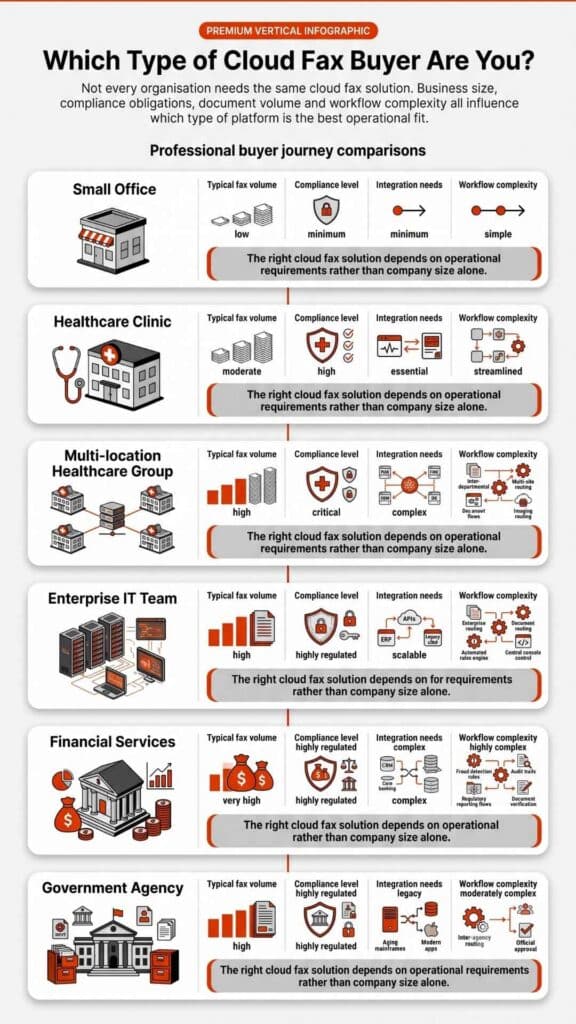
Concord Cloud Fax is often part of the conversation when organizations explore digital fax solutions. It offers basic cloud-based functionality, which may work for moderate usage levels.
However, high volume environments tend to expose limitations more quickly. Performance under heavy load depends on how the system manages concurrency, routing, and automation. If those elements are not built for scale, delays and bottlenecks can still occur.
Another consideration is workflow flexibility. Some platforms focus on simple send-and-receive functionality, while others are designed for deeper integration and automation. In environments where fax workflows are tied to core operations, such as healthcare or financial services, Healthcare Fax Solutions can make a significant difference by supporting more efficient and reliable document e
So while Concord Cloud Fax may meet certain needs, organizations dealing with sustained high volume often look for solutions that are built specifically for enterprise-level demand and complex workflows.
Can Cloud Fax Handle High Volume Sending?
Yes, cloud fax can handle high volume sending, and it does so reliably. It removes the constraints of fax machines and replaces them with scalable infrastructure. It supports automation, integrates with existing systems, and maintains security even when document flow increases. For organizations that rely on fax communication, that shift changes everything.
FAQs
Can Cloud Fax send thousands of faxes at once?
Yes. Cloud fax systems use parallel processing, allowing multiple transmissions at the same time instead of sequential sending.
Does cloud fax eliminate busy signals?
In most cases, yes. Because it doesn’t rely on a single phone line, cloud fax avoids the congestion that causes busy signals.
Is cloud fax secure for high volume communication?
Yes. Most cloud fax solutions include encryption, access controls, and audit logs to protect sensitive data.
Can cloud fax integrate with business systems?
Yes. Many platforms offer APIs that connect fax workflows directly to applications such as EHRs or CRM systems.
Do I need hardware for cloud fax?
No. Cloud fax operates through internet-based systems, so physical fax machines and servers are not required.
Take the Next Step Toward Scalable Faxing
If high volume faxing still depends on machines, manual routing, or overloaded fax servers, it may be time to rethink the setup.
Softlinx cloud fax solutions are designed for organizations that need reliability at scale, especially in healthcare and other regulated industries. With secure infrastructure, workflow automation, and integration-ready systems, they support high volume fax communication without disruption.
Explore how a modern cloud fax approach can fit into your environment and support your daily operations without slowing them down.