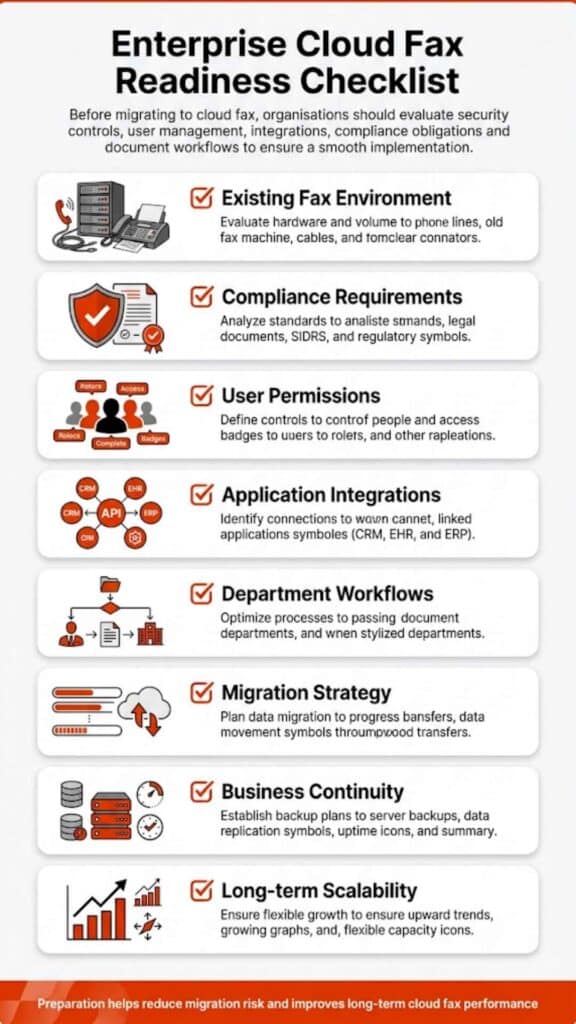
Cloud fax reliability has quietly become one of those things businesses can’t afford to overlook. Whether it’s a hospital sending patient data or a financial firm handling sensitive records, the margin for failure is slim. This guide breaks down how cloud fax actually works, why reliability matters more than ever, and how enterprise-grade solutions are reshaping document transmission in regulated industries.
Cloud Fax Reliability: Why It Matters for Modern Businesses
Cloud fax reliability isn’t just a technical metric; it’s operational stability. When systems fail, workflows stall. When documents don’t arrive, processes break. Most organizations used to rely on a fax machine tied to a phone line. That setup worked, until it didn’t. Hardware failure, busy signals, and paper jams weren’t rare issues. They were routine interruptions.
Now, secure cloud fax reliability depends on distributed infrastructure, not a single device. That shift removes fragile points in the system and replaces them with scalable, monitored networks designed for continuity. Organizations adopting Healthcare Cloud Fax Solutions benefit from the same approach, combining secure document transmission with the reliability required for critical healthcare workflows.
And that’s exactly why industries dealing with sensitive information are moving toward enterprise cloud fax reliability models that prioritize uptime, encryption, and delivery assurance.
What Is Cloud Fax and How Does It Work?
Cloud fax, sometimes called internet fax or electronic fax, replaces physical machines with a digital system that sends documents through secure servers.
Instead of dialing a number from a fax machine, users can send a fax from a computer, email inbox, or browser-based platform. A document is uploaded, converted, and transmitted across encrypted networks. On the receiving side, it arrives digitally, no printing required.
Many businesses start by exploring a cloud fax solution that allows them to send and receive documents without hardware. Others focus on workflow efficiency and look into how to fax from a computer to simplify operations.
What’s changed isn’t just convenience, it’s reliability. Digital transmission eliminates mechanical failure and replaces it with monitored, automated systems.
Cloud Fax Reliability vs Traditional Fax Machines
Before comparing the two, it helps to look at how each system actually behaves under pressure. Reliability isn’t just about sending a document; it’s about what happens when something goes wrong.
| Feature | Cloud Fax | Traditional Fax |
| Uptime | High (redundant systems) | Dependent on one device |
| Transmission | Digital | Analog |
| Failure Risk | Distributed | Hardware-based |
| Scalability | Flexible | Fixed capacity |
| Maintenance | Minimal | Frequent |
Traditional fax systems rely on physical components. If one part fails, the entire process stops. On the other hand, cloud fax systems operate across multiple servers with failover mechanisms. If one route fails, another takes over automatically, often without the user even noticing. This level of resilience is one reason modern Healthcare Fax Solutions are increasingly replacing legacy fax infrastructure in organizations that depend on reliable document exchange. And honestly, that’s where online fax reliability really starts to show up in day-to-day operations.
Key Factors That Define Cloud Fax Reliability
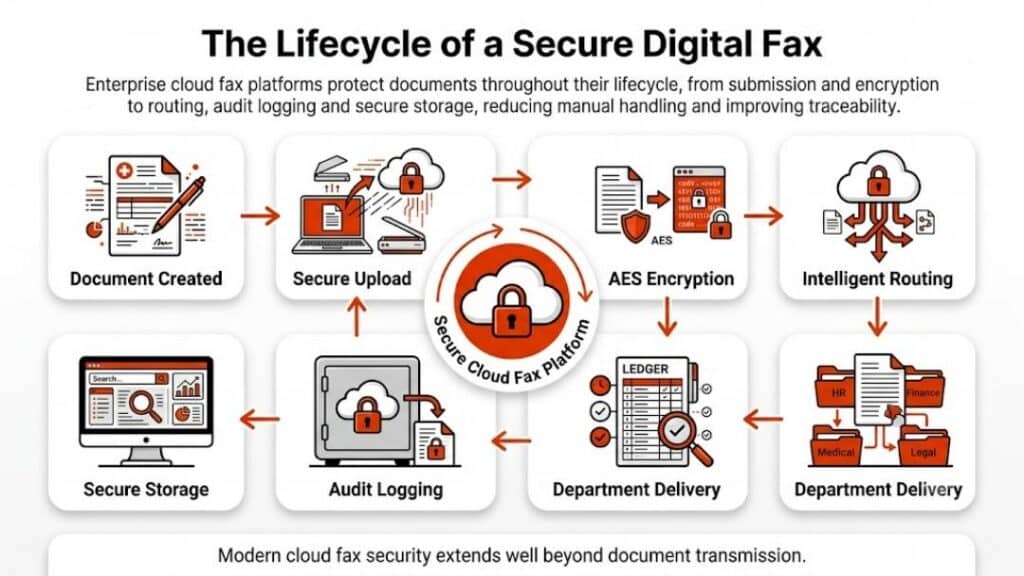
Reliability doesn’t just happen on its own. It’s built into the system, piece by piece. It’s built into the system. Modern enterprise cloud fax reliability depends on redundancy, monitoring, and intelligent routing. Data centers replicate traffic, delivery attempts retry automatically, and audit trails record every transmission.
Businesses that handle high volumes often evaluate whether enterprise fax solutions offer reliable uptime before making a switch.
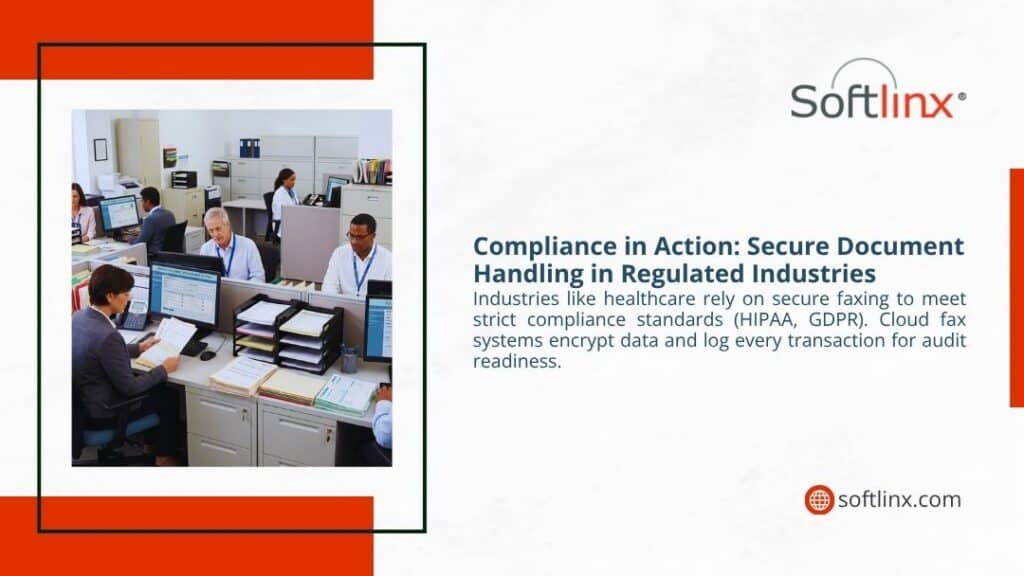
Encryption also plays a central role. Secure cloud fax reliability requires protocols that protect data both in transit and at rest, especially for regulated industries.
Is Cloud Fax More Secure Than Traditional Fax?
Traditional fax machines were never designed for modern security standards. Documents often sit exposed, and transmission over phone lines offers limited protection. Cloud fax systems take a different approach. Data is encrypted, access is controlled, and activity is logged.
Healthcare organizations, for example, rely on HIPAA fax solutions to ensure compliance. Many also review whether fax is HIPAA compliant before implementing new systems.
According to the U.S. Department of Health & Human Services, healthcare organizations must ensure that electronic protected health information is safeguarded. This is where secure cloud fax reliability becomes critical, not just for delivery, but for compliance and accountability.
Real-World Use Cases Where Reliability Is Critical
Cloud fax reliability becomes non-negotiable in environments where delays or errors directly impact outcomes.
In healthcare, documents move constantly: patient records, lab reports, and referrals. A missed fax isn’t just a delay; it can disrupt care. Many providers rely on hospital cloud fax solutions that integrate with clinical systems to ensure continuity.
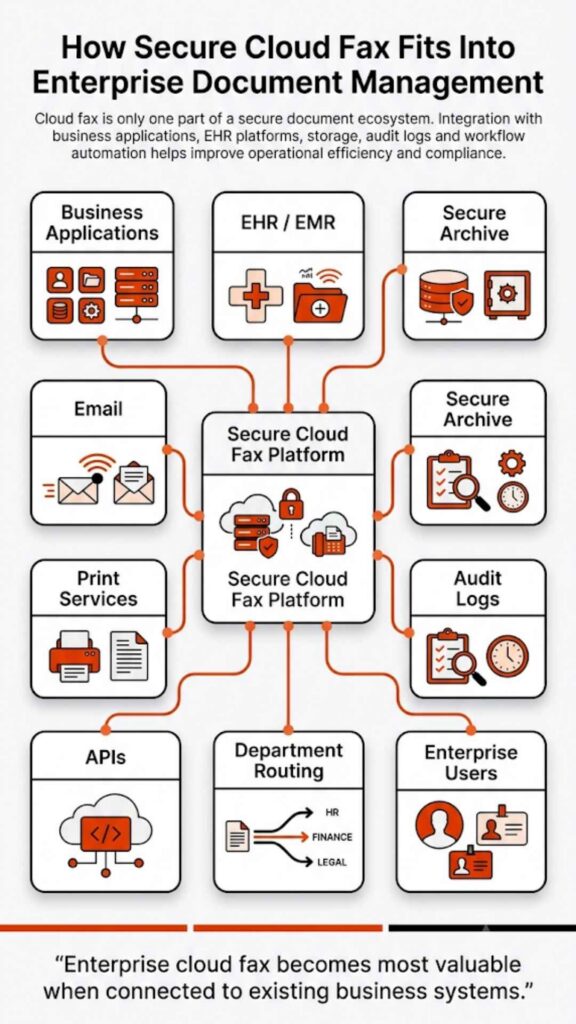
Integration matters here. Reliable faxing is no longer isolated; it connects directly with digital workflows. That’s why organizations prioritize EHR integration to ensure documents move seamlessly between systems without manual intervention.
Insurance companies face similar pressure. Claims processing depends on timely document exchange. Financial institutions handle contracts and verification documents that must be transmitted securely and without interruption.
According to research, over 70% of healthcare organizations still rely on fax for document exchange, reinforcing the need for reliable digital fax infrastructure.
Beyond healthcare, adoption continues to rise across industries. According to CMS, fax remains one of the most widely used methods for exchanging clinical information due to its compatibility with existing systems.
Meanwhile, security benchmarks from Statista and IBM show that data breaches in healthcare average over $10 million per incident, reinforcing the need for secure cloud fax reliability in document transmission.

Can Cloud Fax Handle High Volume Sending Without Failure?
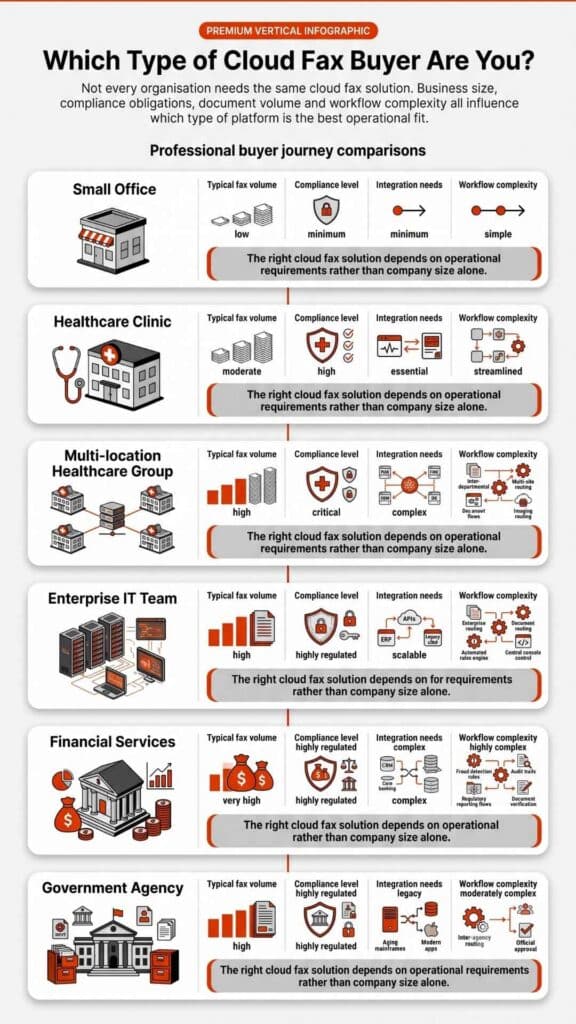
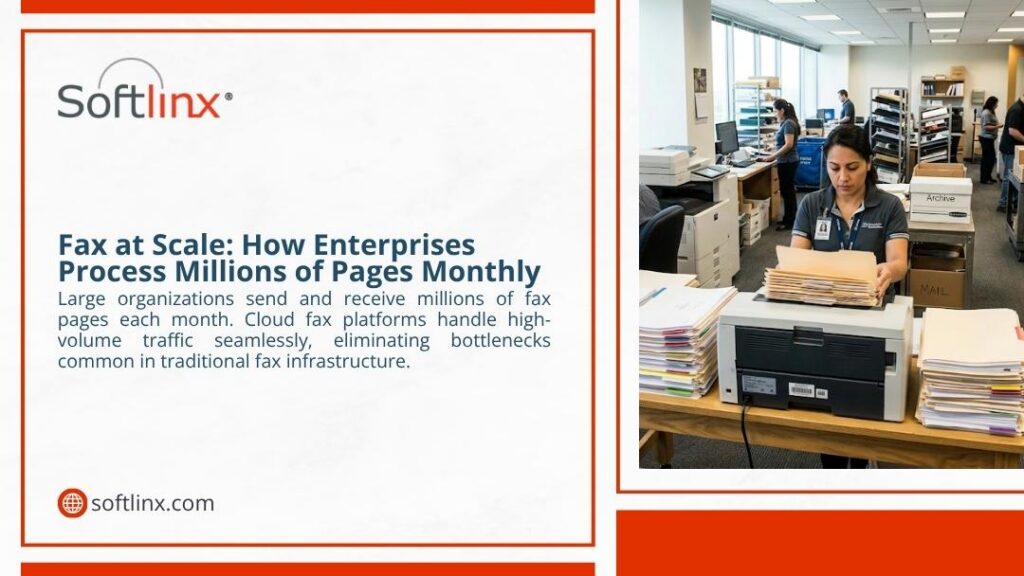
This is where enterprise cloud fax reliability truly stands apart from basic online fax services. High-volume environments, think hospitals, insurance firms, or large enterprises, don’t send a handful of faxes. They process thousands daily.
Reliable cloud fax systems handle this load through intelligent routing, load balancing, and retry mechanisms. If a transmission fails, the system automatically retries using alternate paths. This ensures delivery without manual intervention.
| Capability | Standard Online Fax | Enterprise Cloud Fax |
| Volume Handling | Limited | High throughput |
| Retry Logic | Basic | Advanced automated retries |
| API Support | Limited | Full integration |
| Workflow Automation | Minimal | End-to-end automation |
Organizations often explore whether cloud fax APIs support bulk faxing before scaling operations. This level of infrastructure is what defines true enterprise cloud fax reliability, not just sending faxes, but ensuring they arrive every time.
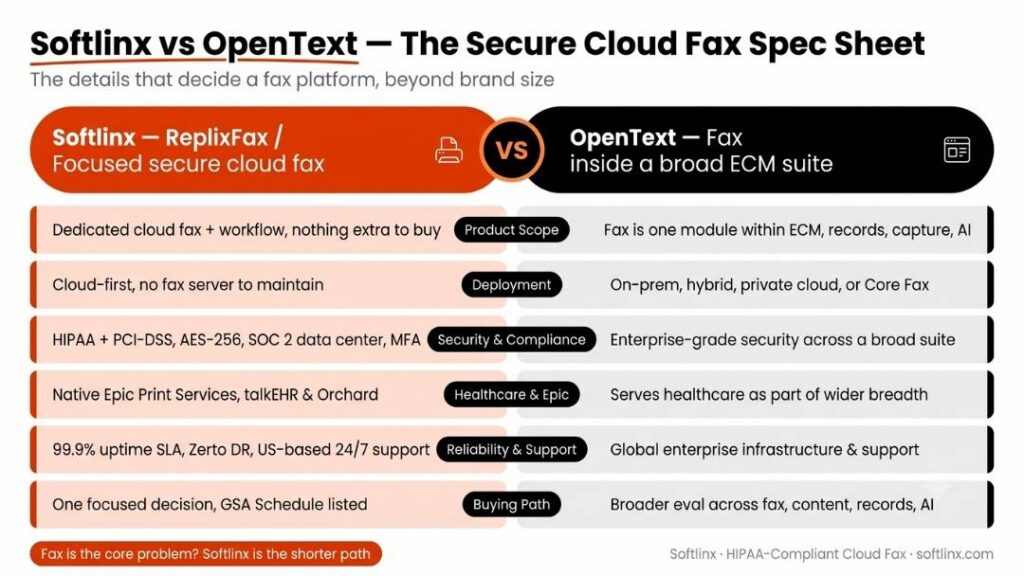
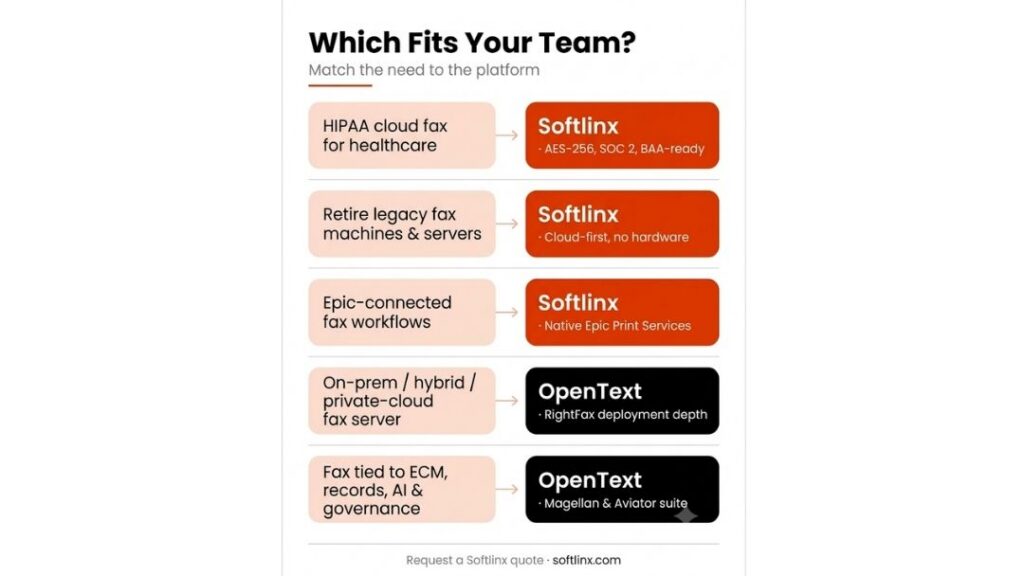
Businesses handling high-volume workflows typically move toward enterprise-grade platforms like Softlinx, where reliability is built into the infrastructure, not added as an afterthought.
How Cloud Fax Improves Workflow Reliability
Reliability doesn’t stop at delivery. It extends into how documents flow inside an organization. Cloud fax systems reduce human involvement in routing and handling documents. Incoming faxes can be automatically sorted, tagged, and delivered to the right department without manual steps.
Many organizations adopt solutions to automate electronic fax workflows and eliminate delays caused by manual processing. Automation also reduces errors. Misrouted documents, lost pages, and duplicate transmissions become far less common when workflows are system-driven.
In healthcare settings, this improves response times. In financial services, it speeds up approvals. That’s really the difference between just sending faxes and actually having a system you can rely on.
How to Ensure Cloud Fax Reliability in Daily Operations
Even the most advanced system depends on how it’s used day to day. And honestly, that’s where cloud fax reliability either holds up or quietly starts to break down.
For teams that send documents regularly, small habits make a noticeable difference. Before sending a fax from a computer or using an online fax service, it helps to verify file formats, confirm recipient numbers, and ensure encryption settings are active.
Many businesses also standardize how they send faxes from PC environments by routing documents through a centralized platform instead of individual tools. That reduces inconsistency and improves delivery success rates.
Another overlooked factor is monitoring. Reliable systems provide delivery confirmations, but teams still need to review logs, especially in high-volume environments. This is where enterprise cloud fax reliability stands apart from basic tools.
And here’s what often gets missed: reliability isn’t just about sending. It’s about how quickly issues are detected and resolved. Systems with built-in alerts and retry logic can prevent small failures from becoming operational problems.
Common Misconceptions About Online Fax Reliability
Some assumptions about online fax persist, even though technology has moved on.
| Misconception | Reality |
| Internet fax is less reliable | Distributed systems improve reliability |
| Free fax services are sufficient | Limited features and uptime |
| Cloud fax lacks security | Encryption and compliance standards apply |
| Fax machines are more stable | Hardware introduces more failure points |
These misconceptions often come from outdated experiences with early internet fax systems. Modern platforms operate very differently. Online fax reliability today is built on enterprise-grade infrastructure, not experimental technology.
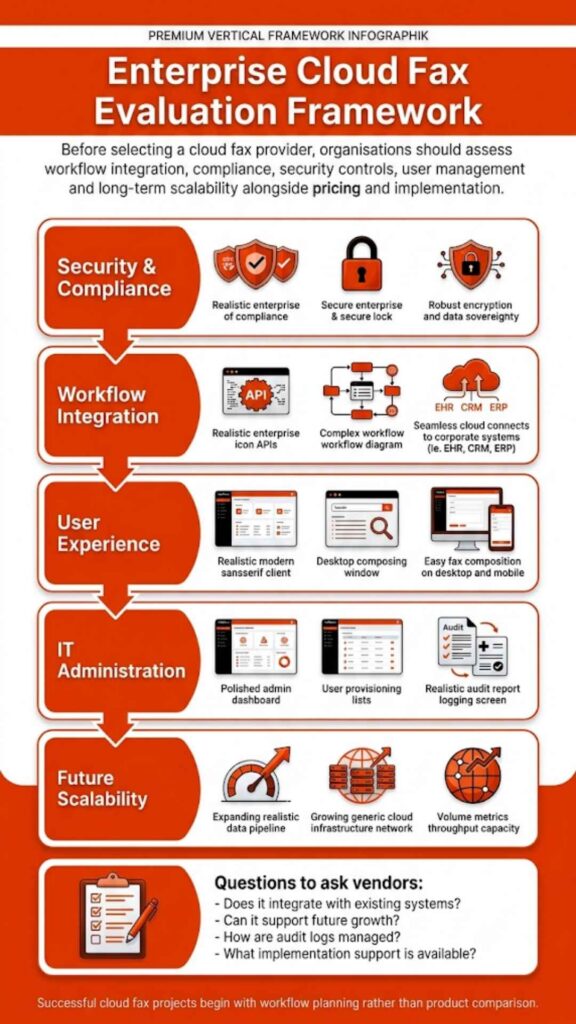
Choosing a Reliable Cloud Fax Provider
Selecting a provider requires more than comparing features.
| Criteria | Why It Matters |
| Uptime SLA | Indicates system stability |
| Compliance Certifications | Required for regulated industries |
| API Capabilities | Supports integration |
| Support Availability | Ensures quick issue resolution |
Organizations looking for secure cloud fax reliability often prioritize providers that specialize in regulated industries rather than general-purpose fax services.
How to Transition Without Disrupting Reliability
Switching systems always carries risk, but with the right approach, it doesn’t have to disrupt operations. A structured migration typically starts with porting existing fax numbers, followed by system integration and controlled testing. This phased approach ensures continuity during the transition.
Businesses often review how to switch from a fax machine to a cloud fax to understand the process. What makes the difference is planning. Reliable providers support staged rollouts, parallel systems, and testing environments to ensure nothing breaks during the shift.
For organizations with compliance requirements, maintaining audit trails and data integrity during migration is just as important as uptime itself.
FAQs About Cloud Fax Reliability
Can I send a fax from my computer reliably without a phone line?
Yes. Modern cloud fax systems allow you to send a fax from a computer using internet-based transmission, which is often more reliable than traditional phone lines.
How does enterprise cloud fax reliability differ from free online fax services?
Enterprise systems offer redundancy, security, and automation, while free tools typically lack uptime guarantees and compliance features.
What makes secure cloud fax reliability important for compliance?
It ensures encrypted transmission, audit tracking, and controlled access, all of which are required in regulated industries like healthcare and finance.
How reliable is cloud fax compared to traditional fax?
Cloud fax is generally more reliable due to redundancy and automated failover systems.
What affects cloud fax reliability the most?
Infrastructure, uptime guarantees, encryption, and workflow automation all play a role.
Is secure cloud fax reliability suitable for healthcare?
Yes, especially when the provider meets HIPAA compliance requirements.
Does online fax reliability depend on internet speed?
Partially, but enterprise systems compensate with retry logic and routing.
How do I receive faxes online without interruptions?
Reliable providers use redundant systems to ensure consistent delivery.
Why Reliable Cloud Fax Is Now a Business Requirement
Cloud fax reliability has shifted from a technical feature to a business necessity. Organizations don’t just need to send documents anymore, they need systems that perform consistently under pressure, across departments, and at scale.
When reliability fails, it’s rarely a small issue. Delayed patient records, stalled insurance claims, missed approvals, these aren’t edge cases. They’re real operational risks that impact outcomes, compliance, and trust.
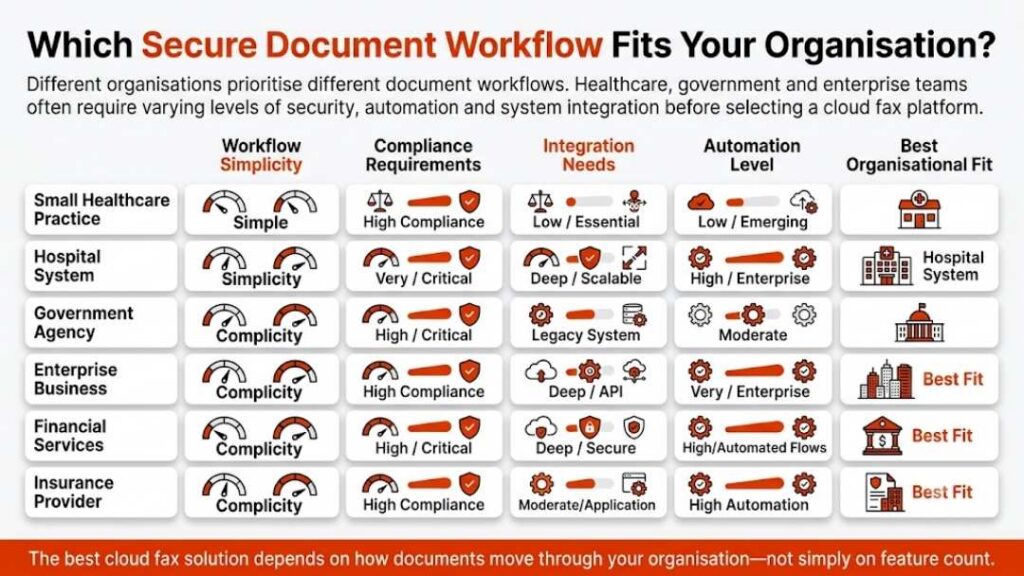
That’s why businesses are moving away from generic fax services and toward enterprise-grade infrastructure designed for regulated environments. Reliability today depends on more than uptime, it depends on integration, automation, and the ability to handle high-volume workflows without disruption.
Businesses that rely on consistent document delivery don’t leave reliability to chance. They move to infrastructure designed for regulated, high-volume environments. Softlinx delivers that level of reliability, built specifically for organizations where uptime, compliance, and workflow continuity are critical.
If your current fax system still depends on manual processes or outdated infrastructure, now is the time to evaluate a platform designed for modern business demands. Softlinx provides secure cloud fax reliability that supports healthcare, finance, and enterprise operations without compromise.