For years, Esker has been closely tied to document automation, accounts payable workflows, and enterprise faxing. That reputation still holds. What’s changed is the environment around it. By 2026, organizations will face tighter compliance rules, more complex integrations, and higher expectations for uptime and workflow reliability.
Those shifts explain why Esker often gets re-evaluated. IT leaders, finance teams, and healthcare organizations aren’t necessarily looking for more features. They’re looking for tools that fit how work actually moves through their systems today. That’s why Esker alternatives increasingly come into the conversation, especially platforms that specialize rather than generalize.
Because Esker spans multiple areas, including document delivery, enterprise fax, and source-to-pay automation, the alternatives organizations evaluate often fall into different categories rather than competing directly with one another.
Some replace Esker’s fax and document-delivery capabilities, while others compete with its financial workflow automation. Understanding that distinction helps teams evaluate alternatives based on the specific operational problem they need to solve.
This article reviews 13 Esker alternatives across three practical categories: enterprise fax and document delivery platforms, accounts payable automation tools, and broader enterprise workflow or ERP systems. Each serves a different purpose, which is why Esker replacements often depend more on operational priorities than on feature lists alone.
Esker Alternatives for Enterprise Fax, AP Automation, and Workflow Control
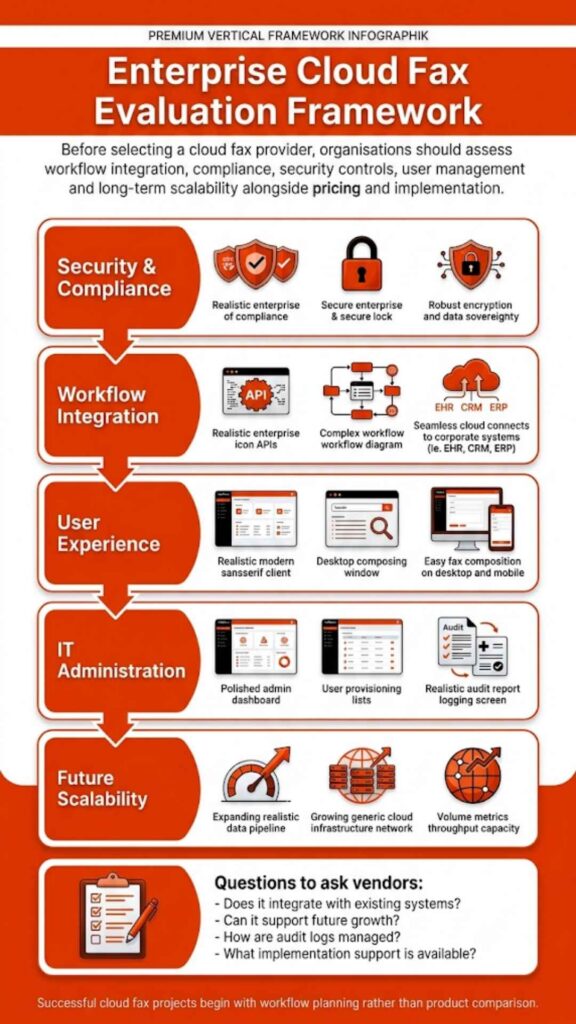
Evaluating Esker alternatives usually starts with a simple question: What role does Esker play in the organization right now? Esker combines document processing, invoice automation, and fax functionality into a single platform, which can be effective in the right context. But not every organization needs everything bundled together.
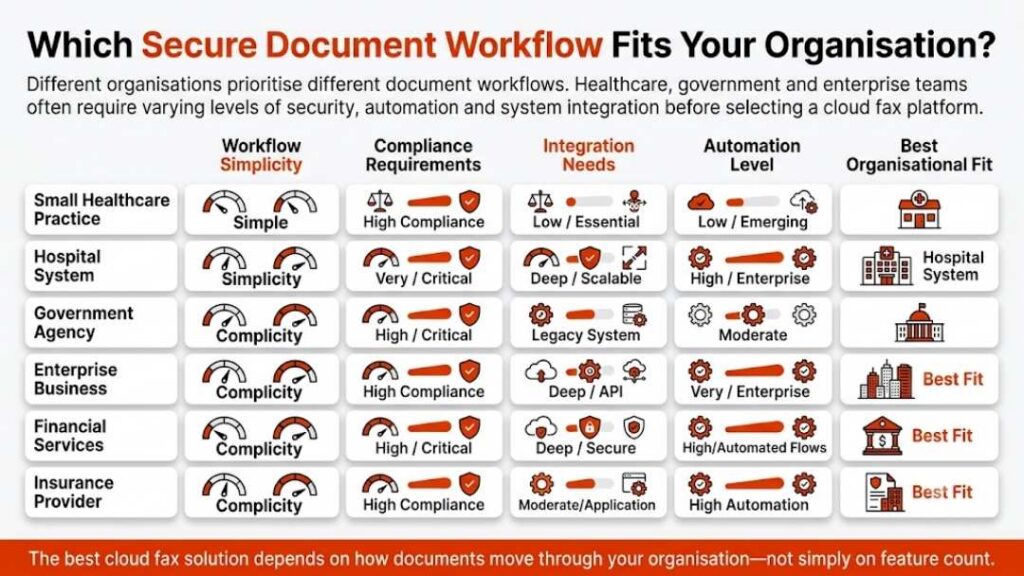
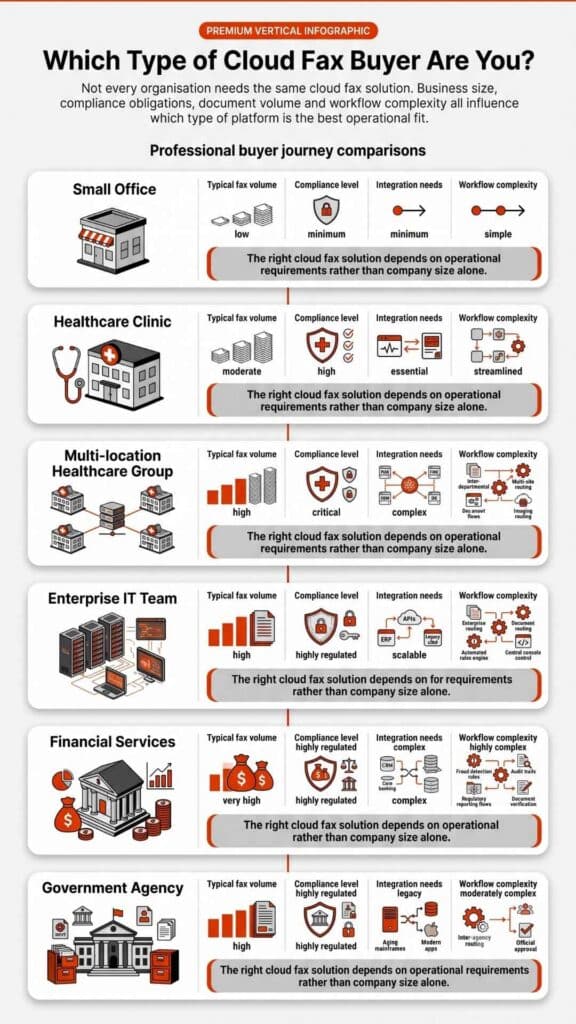
Some alternatives concentrate almost entirely on financial workflows. Others focus on document transmission or fax infrastructure. In regulated environments such as healthcare, insurance, and government, that difference matters more than it might seem at first. A platform built for invoices may not handle high-volume fax workflows well. Likewise, a fax-centric platform may outperform Esker when reliability, system integration, and compliance controls take precedence over financial automation breadth.
To make these differences clearer, the platforms below are grouped by the primary operational role they serve: fax and document delivery infrastructure, accounts payable automation, or broader enterprise workflow and spend management systems.
Enterprise Fax and Document Delivery Alternatives
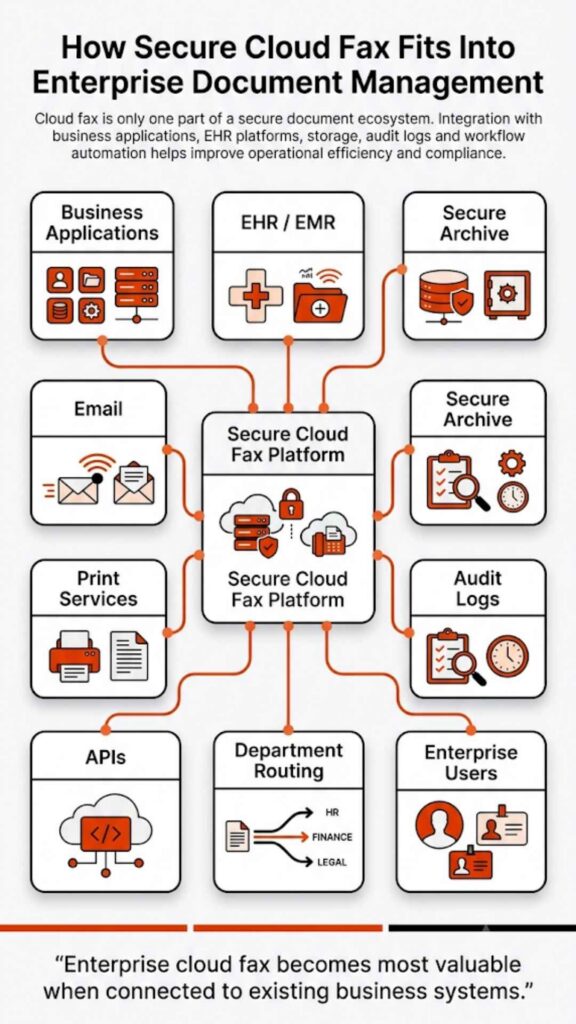
For organizations where fax remains operationally critical, especially in healthcare, insurance, and regulated industries, specialized fax platforms are often evaluated as Esker alternatives. These tools focus on reliability, integration with business systems, and compliance controls rather than financial automation workflows.
1. Softlinx ReplixFax: A Fax-Focused Enterprise Alternative
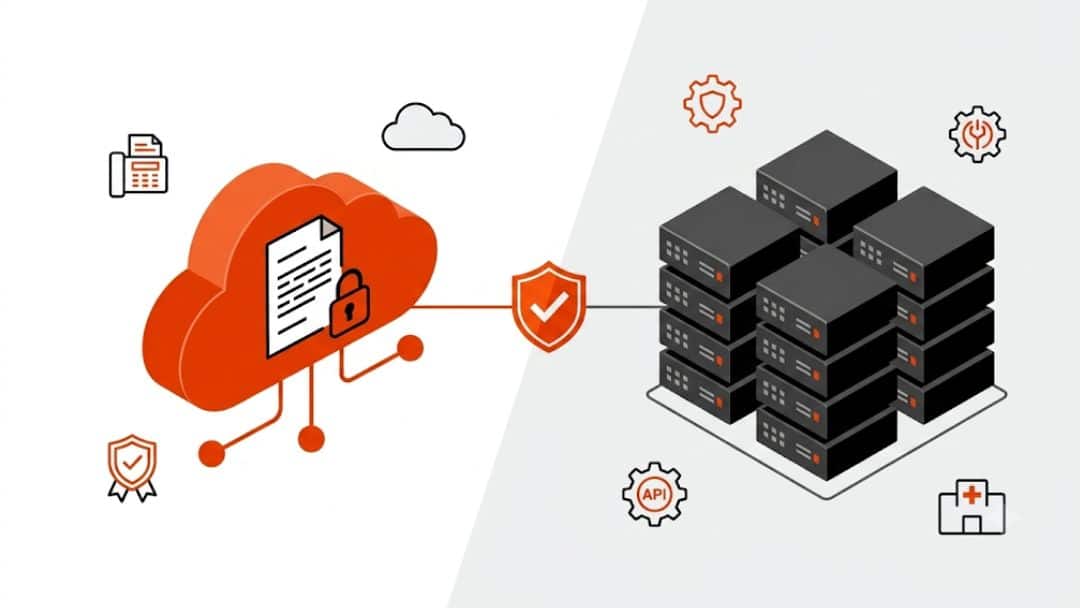
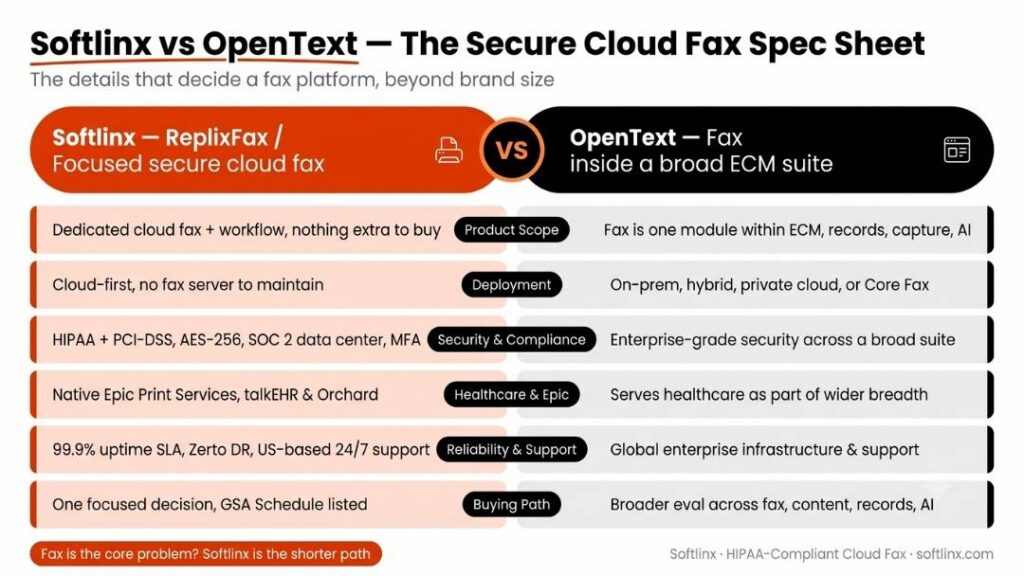
Softlinx approaches the Esker comparison from a different direction. Rather than bundling fax into a broader automation suite, the ReplixFax platform treats fax and document delivery as core infrastructure.
ReplixFax is designed for organizations where fax remains a mission-critical communication channel. Healthcare providers, insurers, financial services firms, and government agencies often rely on Healthcare Fax Services for secure document exchange, and reliability failures can disrupt daily operations. In those environments, a platform built specifically for enterprise fax workflows can provide stronger operational control than a general-purpose automation suite.
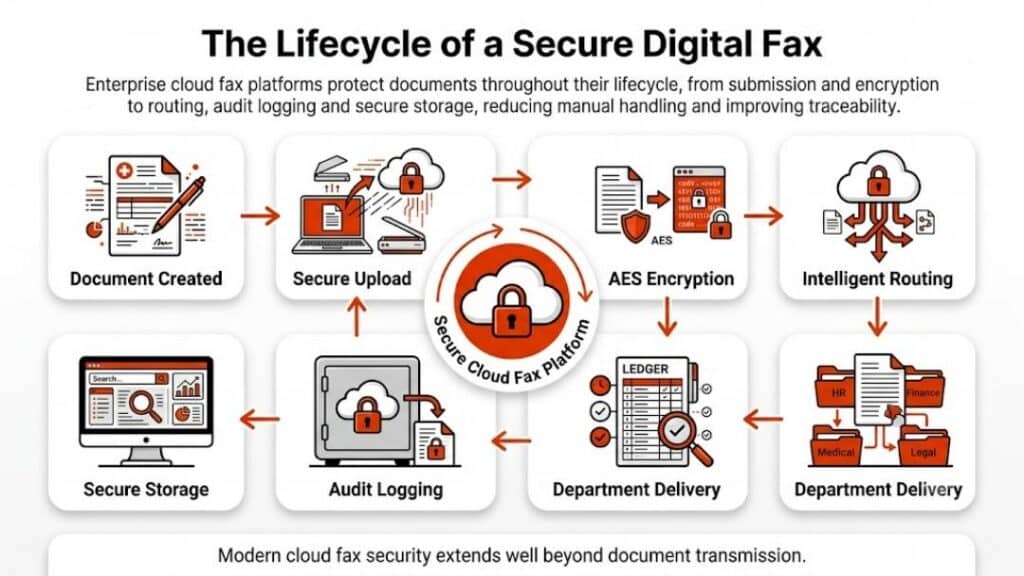
The platform focuses on secure cloud fax, enterprise fax servers, workflow routing, and integration with business applications and healthcare systems. Publicly documented capabilities include API-based integrations, Epic-certified healthcare integration, HIPAA-oriented fax workflows, and deployment options that include both cloud fax services and on-premise fax servers, including Healthcare Cloud Fax Services designed for organizations that need secure and compliant document exchange.
Organizations typically evaluate Softlinx when fax volume is high, regulatory requirements are strict, and document transmission needs to integrate cleanly with existing systems rather than operate as a standalone tool.
The platform prioritizes uptime, compliance alignment, and enterprise-scale fax reliability, making it particularly relevant for organizations where fax and document delivery remain operational infrastructure.
| Pros | Cons |
| Built for enterprise and healthcare fax workflows | Focused specifically on document transmission infrastructure |
| Strong compliance and audit-trail positioning | Best suited for regulated communication workflows |
| API and EHR/EMR/business-app integration support | Not intended as a financial automation platform |
2. FAX.PLUS: Lightweight Cloud Fax Alternative
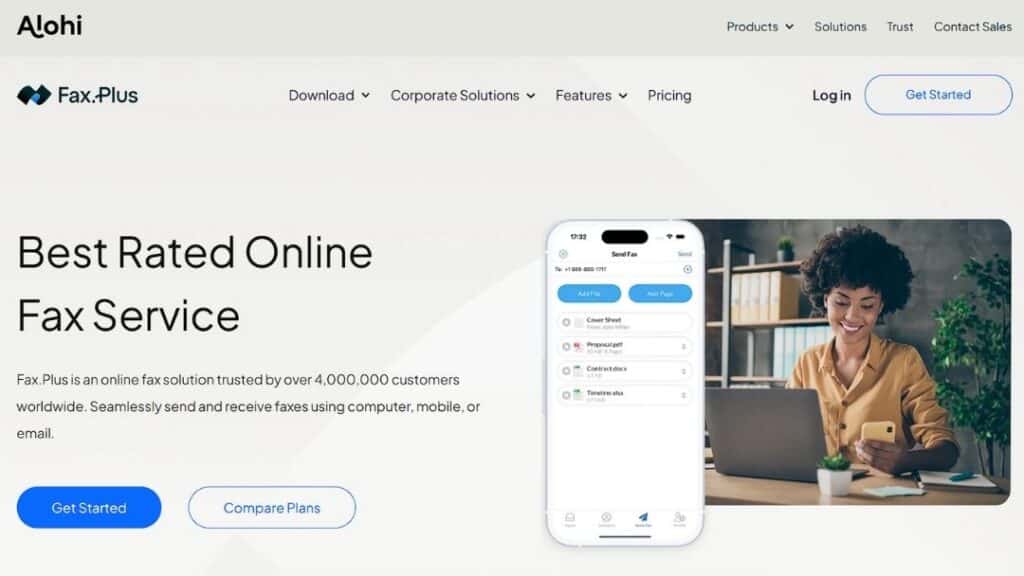
FAX.PLUS is a simpler option by design. It focuses on replacing physical fax machines with a cloud-based service that works through email and web access. There’s no attempt to layer in enterprise workflow automation, and that’s largely the point.
This platform usually fits smaller teams or departments that still need fax but don’t rely on it heavily. It’s also common in remote or distributed setups where physical hardware no longer makes sense.
Organizations choose FAX.PLUS, when convenience outweighs complexity. It handles basic fax needs reliably, but once requirements grow, such as automation, compliance controls, or deep system integration, teams often outgrow it.
| Pros | Cons |
| Simple and accessible | Not intended for enterprise scale |
| No on-premise equipment | Minimal workflow automation |
| Works via email and browser | Limited integration depth |
Accounts Payable Automation Alternatives
The following platforms address a different operational need. While the tools above focus on fax and document delivery infrastructure, the platforms below concentrate on finance automation and accounts payable workflows.
3. Billtrust: Accounts Payable Automation Alternative
Billtrust sits firmly in the finance domain. Its focus is billing, invoicing, and payment workflows, particularly on the accounts receivable side. Compared to Esker, the platform feels more targeted and less concerned with document transmission outside finance.
Organizations typically evaluate Billtrust when invoice processing becomes inefficient or fragmented. It appeals to teams that want to streamline billing operations without introducing a broader document management system.
As an Esker alternative, Billtrust makes sense when financial workflows are the primary concern and fax plays a minimal role.
| Pros | Cons |
| Strong AR and billing capabilities | Limited outside finance use cases |
| Clear focus on payment workflows | Not suited for fax-centric environments |
| Easier onboarding for finance teams | Narrow functional range |
4. AvidXchange: AP-Centered Enterprise Alternative
AvidXchange is built around accounts payable automation and vendor payments. Its design reflects that focus, with tools aimed at reducing manual invoice handling and improving approval efficiency.
Organizations usually turn to AvidXchange when AP volume grows beyond what manual processes can support. It’s commonly adopted by mid-sized to large organizations that want more structure in payables without moving to a full ERP.
In Esker comparisons, AvidXchange stands out as a finance-first option rather than a document or fax platform.
| Pros | Cons |
| Deep AP automation capabilities | Limited document workflow breadth |
| Vendor payment support | Not fax-oriented |
| Designed for scale | Less flexible outside AP |
5. Yooz: Focused Workflow Alternative
Yooz sits firmly in the accounts payable space and doesn’t try to be much more than that. Its core strength lies in handling invoices, approvals, and basic workflow steps without forcing organizations into a larger system overhaul. The platform keeps its scope narrow, which is often intentional rather than limiting.
It tends to work best for mid-sized organizations that want more control over invoice processing but aren’t ready to replace their accounting stack. Finance teams usually adopt Yooz when manual approvals start slowing things down, not because they want a full document automation platform.
What often draws teams to Yooz is its relative simplicity. Approval paths are easy to follow, exceptions don’t disappear into the system, and most users can get comfortable without much training. That said, it doesn’t extend far beyond AP, and it isn’t built for environments where fax or document routing plays a central role.
| Pros | Cons |
| Clear AP approval workflows | Limited outside accounts payable |
| Easy for finance teams to adopt | Not designed for fax-driven processes |
| Connects to common accounting tools | Narrow functional focus |
6. Stampli: An AP Collaboration Alternative
Stampli is centered on accounts payable, but its angle is less about automation for automation’s sake and more about visibility. The platform focuses on making invoice approval easier to understand, especially when multiple people are involved. Conversations, approvals, and invoice data live close together, which reduces back-and-forth.
It tends to work best for finance teams that struggle with bottlenecks rather than volume. Organizations usually turn to Stampli when invoices aren’t getting lost, but they are getting stuck. The platform helps clarify who needs to act and when, without forcing major changes to the underlying accounting system.
Stampli shows up among Esker alternatives because it simplifies approval workflows without introducing a heavy document management layer. That said, its scope remains firmly within AP, and it doesn’t attempt to support broader document transmission or fax workflows.
| Pros | Cons |
| Strong approval transparency | Limited beyond AP use cases |
| Easy for non-technical users | Not designed for document automation |
| Works with existing ERPs | No fax or transmission focus |
Enterprise Workflow, Procurement, and ERP Alternatives
Some organizations evaluate Esker alternatives as part of broader system modernization efforts. In these cases, ERP platforms, procurement suites, or spend-management tools may replace multiple systems at once, including document automation tools. These platforms offer wider operational coverage but typically require more implementation effort and organizational alignment.
7. Quadient: A Document Automation Alternative

Quadient approaches automation from a different angle. Instead of centering on finance, it focuses on how documents are created, managed, and delivered across an organization. This includes customer communications, internal documents, and structured correspondence that needs consistency over time.
Organizations often look at Quadient when document volume grows faster than their ability to manage it manually. It fits environments where accuracy, formatting, and governance matter more than invoice throughput or payment workflows.
The reason Quadient appears among Esker alternatives is its strength in document control rather than financial automation. It is commonly used alongside accounting or ERP systems, not as a replacement. For teams that need tighter control over how information moves and appears, that separation can actually be an advantage.
| Pros | Cons |
| Strong document governance tools | Limited AP-specific automation |
| Scales across departments | Fax capabilities depend on the setup |
| Emphasis on consistency and control | Often paired with other platforms |
8. Coupa: A Spend Management Alternative

Coupa takes a much wider view of spend management. Rather than focusing only on invoices, it brings procurement, expenses, supplier management, and approvals into a single platform. Its strength lies in standardization across large, distributed organizations.
Companies usually consider Coupa when spending visibility becomes difficult to control. As procurement grows more complex, manual processes stop scaling, and governance starts to matter more than speed alone. Coupa addresses that problem directly, though it often requires careful rollout.
As an Esker alternative, Coupa fits organizations that want to manage how money moves rather than how documents move. It’s less about transmission and more about oversight, which makes it powerful, but not always lightweight.
| Pros | Cons |
| Broad spend management coverage | Significant implementation effort |
| Strong procurement controls | Can feel heavy for smaller teams |
| Scales globally | Not fax or document-centric |
9. Oracle NetSuite: A Cloud ERP Alternative
Oracle NetSuite is a full cloud ERP, not a point solution. It covers finance, operations, inventory, and reporting in one environment, which is both its appeal and its challenge. Organizations don’t adopt NetSuite casually; it usually follows a broader system consolidation effort.
NetSuite often replaces multiple disconnected tools rather than supplementing them. Companies choose it when financial data fragmentation becomes a risk and leadership wants a single source of truth.
As an Esker alternative, NetSuite enters the conversation when document automation is only one piece of a much larger operational puzzle. It offers structure and scale, but it also demands time, planning, and internal alignment.
| Pros | Cons |
| Unified ERP platform | Steep learning curve |
| Scales with business growth | Higher cost and complexity |
| Strong financial controls | Not specialized in fax workflows |
10. SAP Ariba: A Procurement Automation Alternative
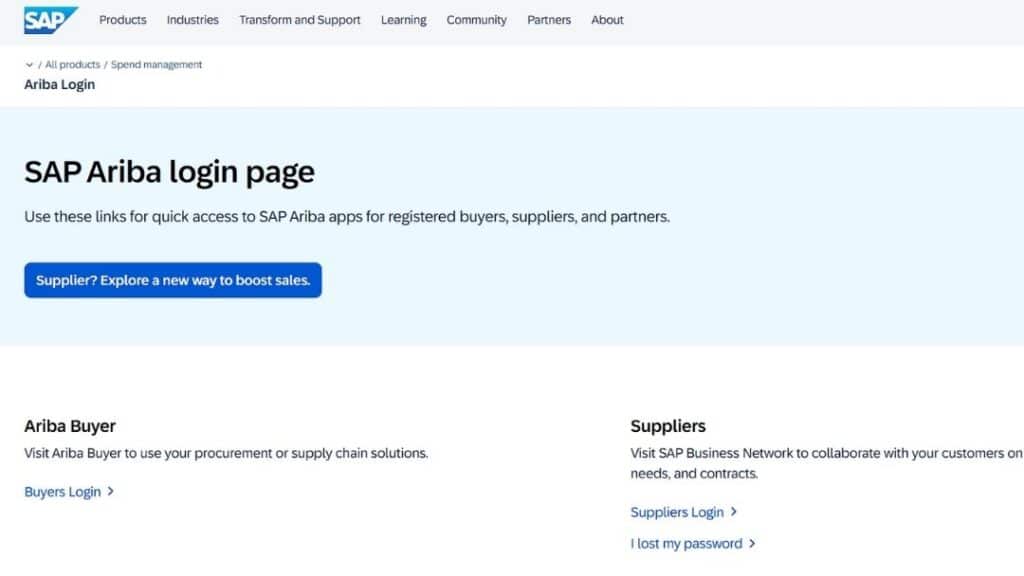
SAP Ariba focuses on procurement and supplier collaboration, particularly for organizations operating across regions or regulatory environments. Its value comes from managing supplier relationships, sourcing, and purchasing at scale rather than handling internal document workflows.
Enterprises typically consider SAP Ariba when procurement complexity outpaces manual controls. Supplier onboarding, contract management, and compliance tracking are core strengths, especially within SAP-centric environments.
SAP Ariba appears when procurement governance matters more than document transmission or invoice routing. It integrates tightly with SAP systems, which can be a benefit or a limitation, depending on the organization.
| Pros | Cons |
| Strong supplier network | Complex onboarding |
| Deep procurement governance | Best suited for SAP ecosystems |
| Enterprise-grade compliance | Limited fax relevance |
11. Microsoft Dynamics 365: A Broad ERP Alternative
Microsoft Dynamics 365 blends ERP and CRM capabilities under a single platform. Its appeal often comes from familiarity rather than specialization.
Organizations already using Microsoft tools find it easier to extend into finance and operations without switching ecosystems.
Dynamics 365 usually enters Esker alternative evaluations when teams want broader system alignment rather than a standalone automation tool. It offers flexibility, but that flexibility often requires configuration effort.
| Pros | Cons |
| Native Microsoft integration | Requires customization |
| Broad enterprise capabilities | Not purpose-built for fax or AP |
| Familiar environment | Complexity grows with scale |
12. Spendesk: A Spend Control Alternative

Spendesk approaches the problem from a spend-control angle rather than document automation. Its focus is on managing company spending before it happens, including expenses, cards, and budgets, rather than processing invoices after the fact. That distinction matters, and it’s why Spendesk often complements other systems instead of replacing them.
Teams usually look at Spendesk when visibility becomes an issue. When employees spend across departments and geographies, tracking approvals manually stops working. Spendesk brings structure to that chaos, though it doesn’t attempt to manage documents or transmission workflows.
Spendesk fits organizations that want tighter control over expenses but already have accounting or AP systems in place. It’s not meant to handle fax, document routing, or compliance-heavy workflows.
| Pros | Cons |
| Strong spend visibility | Not a document platform |
| Real-time budget controls | Limited AP functionality |
| Easy for employees to adopt | No fax or workflow routing |
13. HighRadius: A Finance Automation Alternative
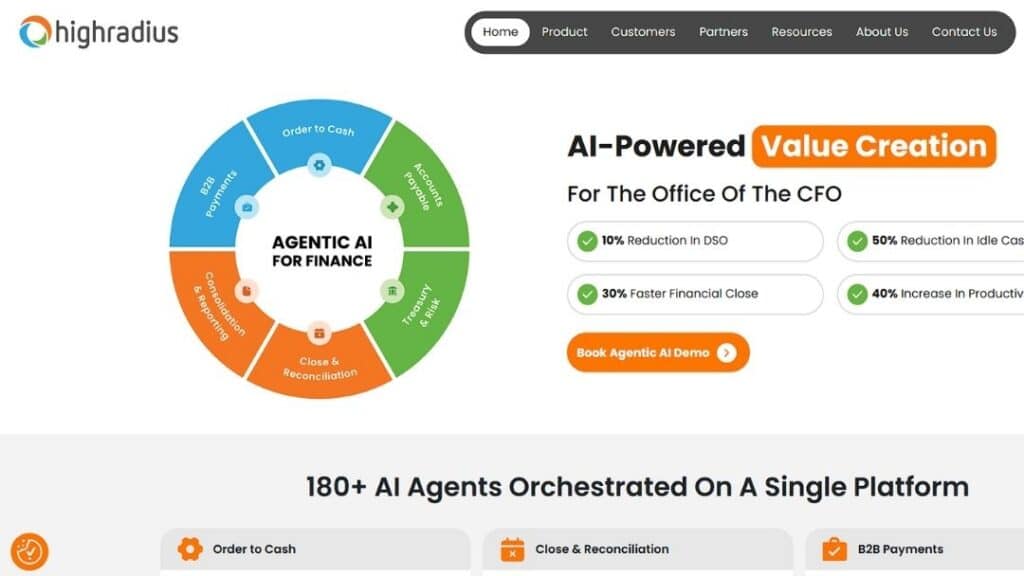
HighRadius operates deeper in the finance stack, with a focus on receivables, credit management, and analytics-driven automation. Its strength lies in helping large organizations manage complex financial processes using data rather than manual oversight.
Companies typically turn to HighRadius when scale introduces risk. As transaction volumes increase, manual reconciliation and credit decisions become harder to justify. HighRadius addresses that challenge with automation and predictive insights, though the platform assumes a mature finance operation.
HighRadius appears less as a document automation replacement and more as a strategic finance tool. It’s powerful, but it expects commitment, both in implementation and ongoing use.
| Pros | Cons |
| Advanced finance automation | Complex setup |
| Strong analytics and reporting | Narrow audience |
| Built for enterprise scale | Not document- or fax-centric |
Comparative evaluation: fax-centric vs automation suites
Choosing among Esker alternatives often comes down to specialization versus breadth.
| Category | Strength |
| Fax-centric platforms | Better compliance control, simpler workflows |
| AP automation suites | Strong finance and approval processes |
| ERP-based solutions | Unified enterprise data |
| Lightweight tools | Fast deployment, lower overhead |
Organizations benefit when they align tool selection with operational priorities rather than feature volume.
Why organizations seek alternatives to Esker
Organizations don’t usually move away from Esker on a whim. Reassessment tends to happen when operational priorities shift or when the platform no longer aligns cleanly with cost, flexibility, or regulatory demands. Cloud migrations, compliance reviews, and system consolidation projects are common triggers.
| Business Driver | Why It Matters |
| Industry compliance requirements | Healthcare, finance, and government often require tighter control over fax workflows and audit trails |
| Integration limitations | ERP, EHR, and custom applications may need deeper or more flexible API access |
| Deployment complexity | Some teams prefer modular tools rather than a broad, monolithic suite |
| Cost structure | Enterprise licensing does not always scale evenly across departments |
| Workflow specialization | Focused fax or AP platforms can outperform generalist systems |
After reviewing these factors, many organizations narrow their search to tools that do one or two things well instead of trying to cover every scenario.
Choosing the right Esker alternative for long-term fit
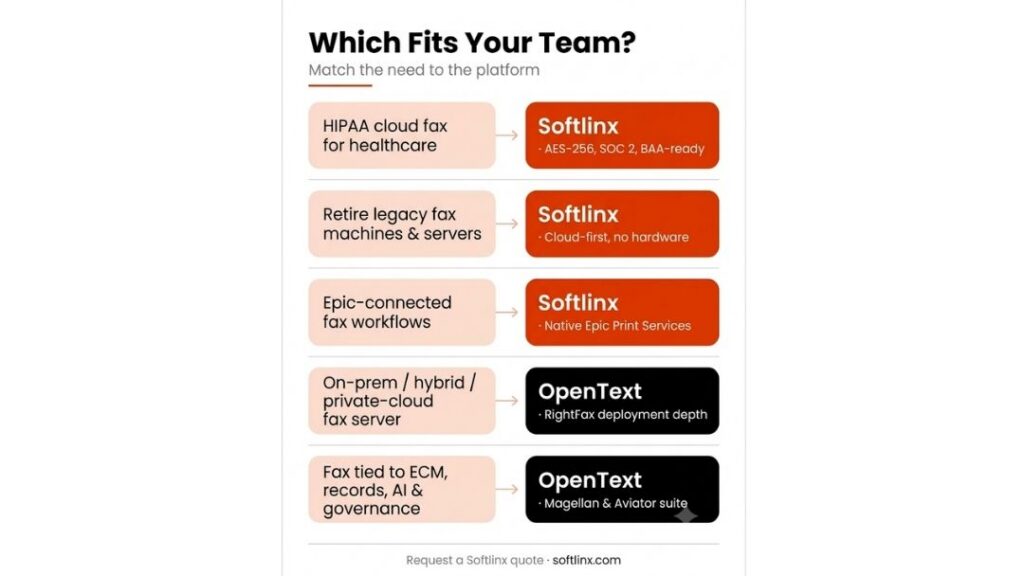
No single platform replaces Esker in every scenario. Some organizations need compliance-driven fax workflows more than invoice automation. Others prioritize finance visibility over document routing. When fax remains mission-critical, solutions like Softlinx ReplixFax deserve close evaluation because they focus on reliability, compliance, and integration without unnecessary complexity.
If your organization depends on regulated document exchange, scalable fax workflows, and predictable system behavior, exploring a fax-first alternative may offer a clearer return than expanding into broader suites.