Cloud fax has become essential for U.S. organizations that handle regulated data, high-volume fax communications, or multi-location operations. This article explains how benefits of cloud fax works, why it outperforms traditional fax methods, and what advantages it brings to healthcare systems, financial institutions, insurers, government agencies, enterprises, and educational institutions.
Additionally, it also examines security, compliance, scalability, workflow integration, and advanced enterprise features that older fax systems cannot match.
What Cloud Fax Is and Why It Still Matters in the U.S. Market
Despite constant talk about “paperless offices,” fax remains a core communication tool across many American industries. Healthcare facilities depend on fax for clinical notes, orders, and records.
Insurers process claims through fax. Government agencies depend on fax for sensitive communications. Financial institutions and legal offices use fax because it ensures traceability and secure document transfer.
Cloud fax builds on these needs without the drawbacks of legacy fax equipment. Instead of a physical fax machine linked to a dedicated phone line, cloud fax uses an internet-based infrastructure to send and receive documents.
Users upload a file through a web portal, an email client, a print driver, or an API. The cloud fax provider handles delivery to the recipient’s fax number, even if that recipient uses a traditional machine.
Cloud fax eliminates physical devices, toner, paper jams, and line congestion. It also removes the need for telecom services dedicated only to fax. More importantly, cloud-based fax systems introduce digital-level transparency, audit visibility, automation, and compliance safeguards that legacy machines cannot provide.
For a detailed breakdown of cloud fax capabilities, Softlinx outlines them under its cloud fax service section, including options for healthcare faxing, enterprise faxing, and specialized production fax.
Traditional Fax Limitations That Cloud Fax Eliminates
Legacy fax systems have survived for decades, but their weaknesses have become obvious, especially for U.S. organizations with remote staff or multi-site operations. The biggest limitations include hardware breakdowns, rising telecom costs, long-distance surcharges, unpredictable line congestion, and misdirected printouts.
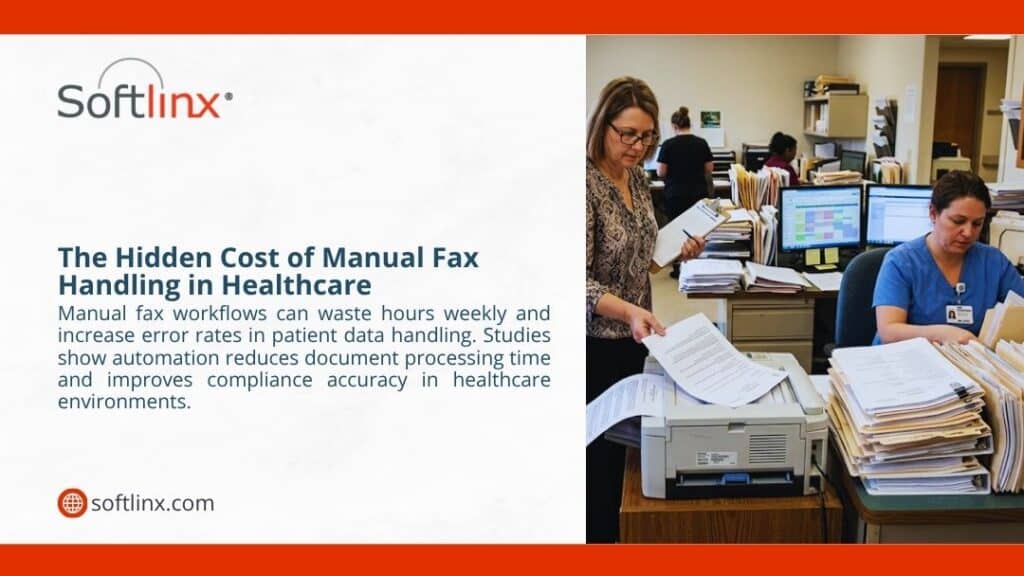
A traditional fax machine requires a dedicated phone line. That line becomes a bottleneck when volumes spike. Faxes print on hardcopy paper unless someone scans them manually. If the device jams, overheats, or runs out of toner, business stops. Physical faxing exposes sensitive documents to anyone who walks by a machine. In regulated industries, that risk can trigger compliance violations.
Storage is another pain point. Physical fax files pile up quickly, and many U.S. organizations still devote closets or entire alcoves to paper archives. This is costly and inefficient.Cloud fax removes all of these problems. No physical hardware. No paper output trays. No line issues. Documents routed digitally. Incoming faxes arrive in email inboxes or secure portals. Outgoing faxes leave through email-to-fax, print-to-fax, or a web portal.
Core Benefits of Cloud Fax for U.S. Businesses
The following are the core benefits of cloud fax for businesses.
1. Security and Compliance Improvements
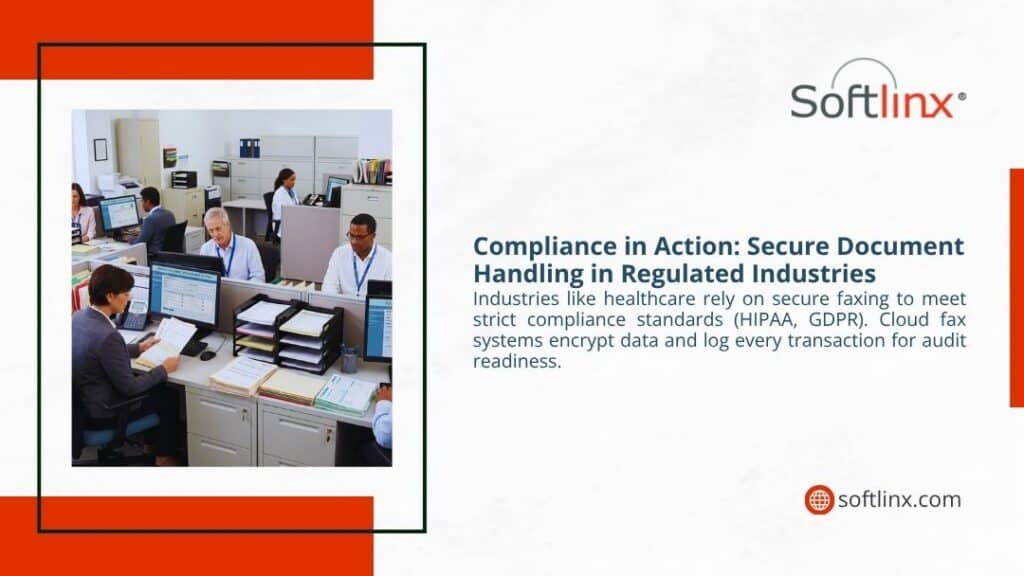
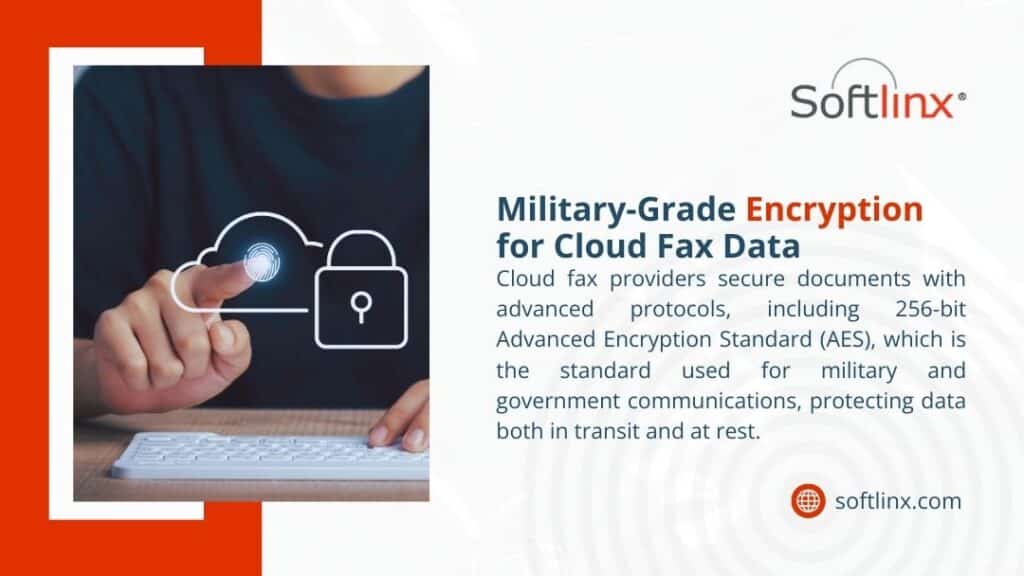
Security has become the top concern for U.S. organizations, especially those in healthcare, finance, insurance, and government. Cloud fax platforms secure documents end-to-end with encryption during transmission and storage. Access to fax files requires authenticated login credentials, cutting the risk of unauthorized access.
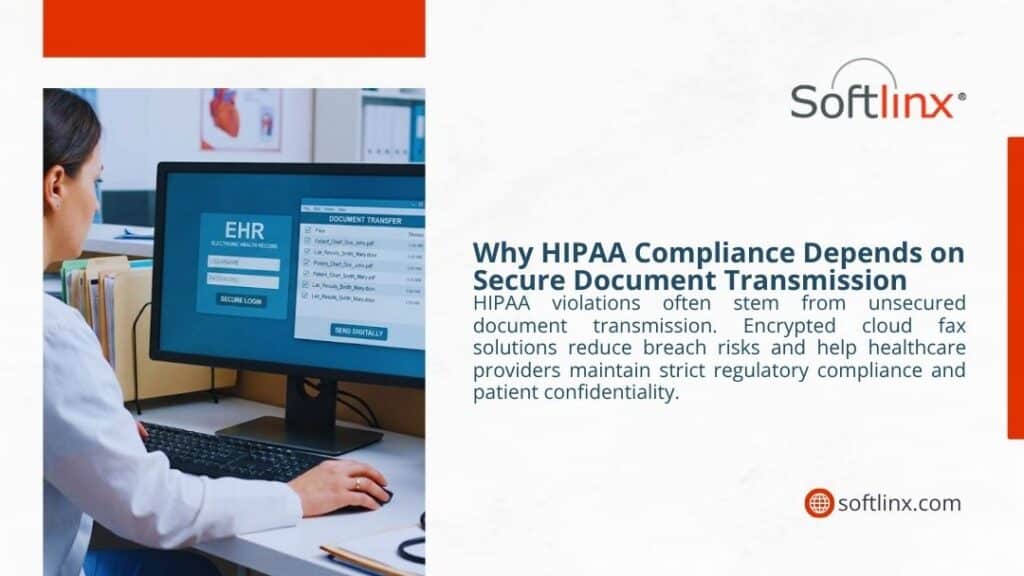
Unlike a physical fax machine that prints documents openly, cloud fax keeps all files in secure digital form. Audit trails show who accessed each file and when. This is essential for HIPAA compliance, which requires strict control over patient information. Softlinx provides thorough guidance on this topic through its HIPAA fax and HIPAA-compliant fax service pages.
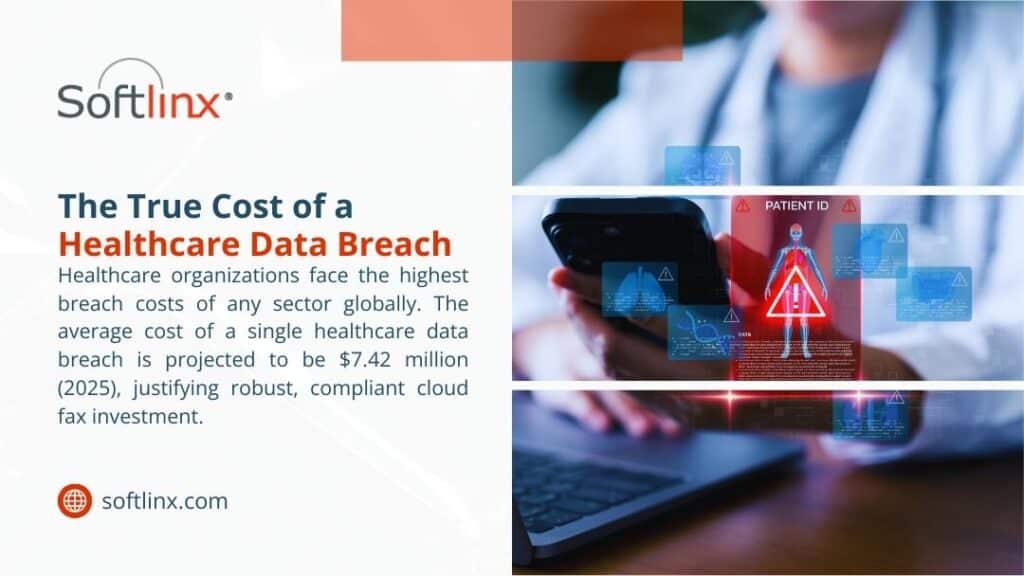
According to a 2023 data-exfiltration report from the U.S. Department of Health and Human Services, 79% of large healthcare breaches reported in 2022 were caused by hacking or other IT incidents, while only 5% involved paper or film records such as printed charts or documents. Cloud fax eliminates that risk because documents never sit on a printer tray.
Financial institutions also benefit from secure transmission. The Federal Financial Institutions Examination Council (FFIEC) highlights digital audit trails and encrypted communication as required data-protection measures. Cloud fax aligns with these requirements and reduces compliance risk.
2. Consistent Cost Structure Without Hardware Complexity
Cloud fax simplifies cost management. The organization no longer buys fax machines, pays for repairs, or stocks toner. Dedicated phone lines disappear. Long-distance charges vanish. Cloud fax pricing follows a predictable monthly or annual structure.
While cost claims must remain general rather than promotional, it is widely documented that fax hardware maintenance accounts for a significant portion of fax-related expenses. A 2024 IDC MarketScape report confirms that digital fax infrastructure can deliver lower costs, greater reliability, better scalability, and enhanced workflow integration compared with traditional analog fax over telephone lines. Cloud fax stabilizes costs by eliminating those variables.
Enterprise teams also avoid downtime caused by broken machines or telecom issues. This matters for hospitals, financial firms, and government agencies that communicate time-sensitive information daily.
3. Remote Access and Support for Distributed Workforces
The shift to remote and hybrid work across the U.S. pushed many organizations to review their communication infrastructure. Employees needed to fax documents without visiting a physical office. Cloud fax enables staff to send and receive documents securely from any internet-connected location.
A nurse working at a satellite clinic, a claims processor working from home, or a case manager coordinating services across states can all access the same cloud fax platform. This makes cloud fax valuable for organizations with multiple campuses or large geographic footprints. Softlinx addresses these use cases through its healthcare-focused pages, including hospital cloud fax solutions and clinic cloud faxing.
4. Scalability for High-Volume and Enterprise Operations
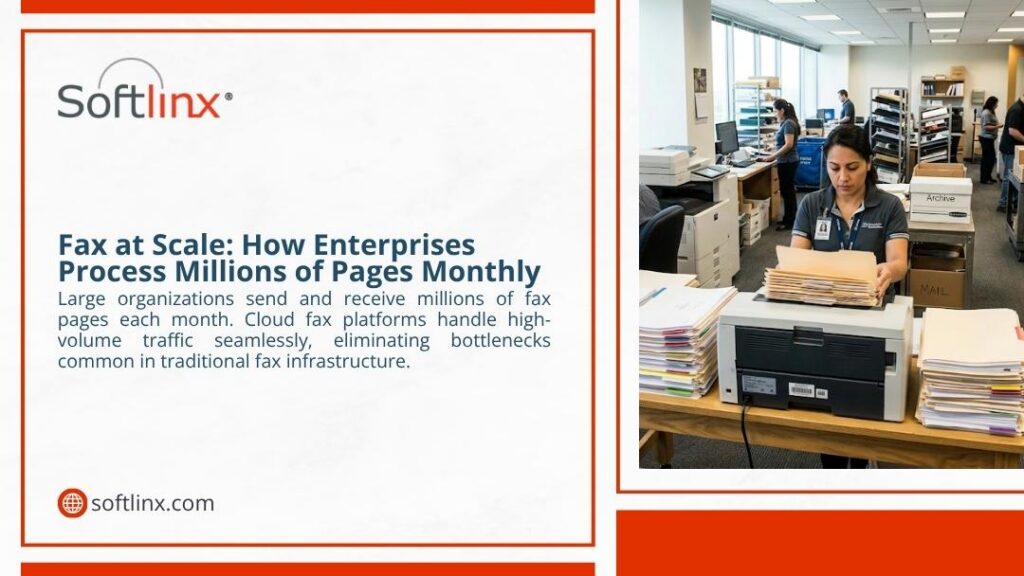
Cloud fax adapts to any volume. A healthcare system transmitting thousands of daily orders, a financial institution processing loan packets, or a government department distributing compliance notices can scale up instantly.
Enterprise cloud fax services support high throughput, bulk faxing, broadcast fax, and automated workflows. Production faxing is especially useful for organizations that send large batches of patient forms, claim letters, HR notices, or regulatory alerts.
For example, insurance companies often send large numbers of policy updates at once. Bulk fax eliminates the need to schedule these transmissions manually. Similarly, manufacturing plants use broadcast fax to distribute process changes across multiple locations.
5. Automation and Workflow Integration
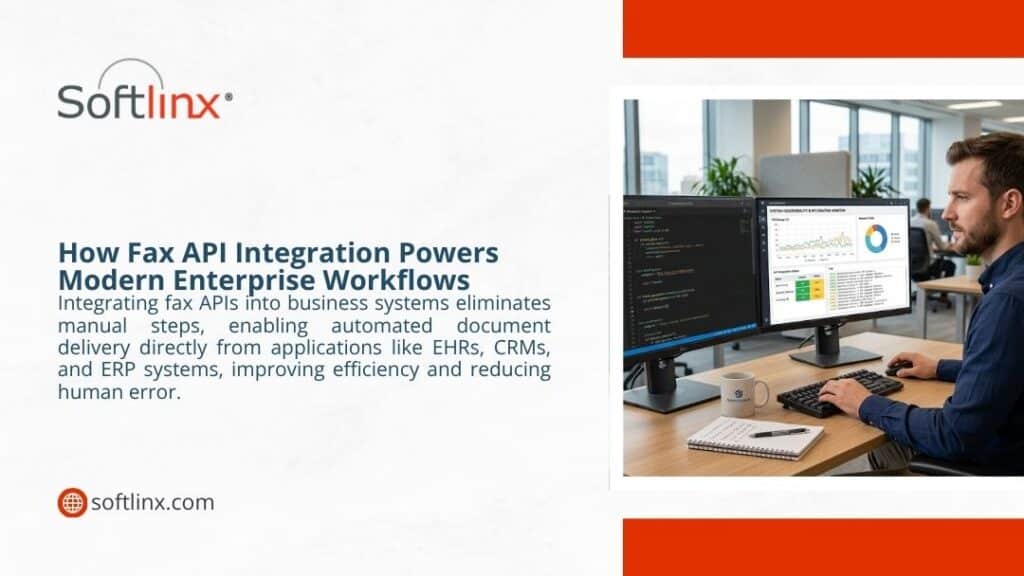
Cloud fax integrates with existing systems through APIs. Instead of manually uploading every document, organizations automate fax workflows from within their EHR, CRM, ERP, or document management platform. Softlinx documents these capabilities under cloud fax APIs and broadcast faxing, and its broader developer API section.
Automation allows organizations to route incoming faxes into specific folders, workflows, or queues. Healthcare providers use barcode routing to distribute orders and results to the right clinical departments. Insurance companies automate claims routing. Government agencies distribute forms digitally without human intervention.
6. Digital Document Management and Searchability
Traditional faxing produces a stack of paper that must be filed manually. Cloud fax stores every document digitally. Users search by date, sender, or subject. Audit logs track activity. Storage no longer requires back rooms, file cabinets, or off-site archiving. Recovery becomes simple, since every document remains stored in an encrypted cloud space.
7. Better Control Over Fax Communications
Organizations that rely on legacy fax machines struggle with unpredictable logs, busy signals, and long-distance failures. Cloud fax eliminates “fax uncertainty.” Web dashboards show real-time status, delivery confirmation, timestamps, and failed attempts. IT teams gain visibility into usage trends and volumes, which helps with planning and compliance documentation.
Hospitals and clinics often need evidence that a referral, radiology order, or authorization request was delivered. Cloud fax provides that proof instantly. Financial or legal teams benefit from the same visibility.
Cloud Fax Advantages for Regulated U.S. Industries
Some industries rely on fax more than others. Healthcare, insurance, banking, government, manufacturing, and education face strict requirements for data protection.
Healthcare Providers
Clinical workflows still depend heavily on fax. Cloud fax allows providers to manage referrals, test results, lab orders, discharge summaries, authorizations, and insurance communications securely and efficiently. Softlinx offers detailed guidance through healthcare faxing solutions and its EHR integration pages, including EPIC integration and EHR integration.
Insurance and Financial Services
Insurers manage claims, forms, policy updates, and medical necessity reviews. Financial firms transmit sensitive loan packets or customer records. Both sectors require encryption and audit logs. Softlinx addresses these industries through financial services, faxing, and insurance faxing.
Government Agencies
Government departments exchange secure documents with citizens, businesses, and internal stakeholders. Fax remains widely used for regulatory compliance, recordkeeping, and secure communication. Cloud fax improves transparency and offers secure audit trails that traditional fax machines lack.
Manufacturing and Education
Manufacturing firms use fax for supply chain coordination, order confirmations, and regulatory documentation. Colleges and universities rely on fax for records processing, admissions documents, and departmental communications.
Advanced Enterprise Features That Strengthen Cloud Fax Value
| Feature | Description | Who Benefits Most |
| Bulk and Broadcast Fax Capability | Allows organizations to transmit large volumes of documents in one action, supporting high-volume outreach and operational communication. | Insurance companies distributing notices, manufacturers sharing updated SOPs, and healthcare networks issuing policy changes across multiple clinics. |
| Barcode-Based Fax Workflow | Uses barcode identifiers to route incoming fax documents to correct destinations automatically, improving accuracy and speed in document distribution. | Hospitals, outpatient clinics, billing departments, and administrative teams handling high-volume clinical or claims documentation. |
| Fax Server Replacement | Replaces aging on-site fax servers with a secure cloud-based system, eliminating hardware maintenance and telecom dependencies. | IT departments, enterprise organizations are retiring legacy fax servers, and teams are consolidating communication infrastructure. |
| Automated Digital Queues | Incoming faxes enter pre-assigned digital folders or workflow queues based on pre-set rules such as sender or document type. | Healthcare operations, insurance processing teams, government agencies, and any organization receiving high volumes of inbound faxes require fast sorting. |
What to Look for When Choosing a Cloud Fax Provider?
Organizations evaluating cloud fax options benefit from focusing on measurable, verifiable criteria rather than broad claims. The priority is proven compliance support, especially for sectors that handle protected or regulated information.
A reliable provider must offer encrypted transmission and secure storage to protect documents in transit and at rest. High availability and strong service reliability also matter, since downtime interrupts essential communication flows and creates operational risk.
A thorough audit trail is another important factor because it provides transparency for security teams and compliance auditors. For enterprise-level operations, true scalability is essential; the system must handle fluctuating or high-volume fax activity without congestion or performance delays.
Integration flexibility should also be a central requirement. Effective cloud fax platforms connect smoothly with existing systems through APIs, EHR platforms, CRM tools, ERP systems, and other workflow environments.
Customer support remains a deciding factor for many organizations, particularly those migrating away from legacy fax servers or coordinating multi-site transitions. Lastly, a provider should maintain clear, well-defined data retention and storage policies so organizations understand where information resides, how long it remains accessible, and how it will be handled throughout the document lifecycle.
Addressing Common Cloud Fax Concerns
Some organizations hesitate due to familiarity with legacy fax machines or concern about internet outages. Modern cloud fax providers use redundant infrastructure, secure architecture, and well-documented workflows that minimize downtime and ensure continuity. Staff training also tends to be straightforward because email-to-fax and web portal workflows mirror familiar processes.
Concerns about privacy or phishing diminish with secure authentication, encryption, and audit logging. For healthcare organizations, the availability of HIPAA-compliant fax safeguards gives leadership confidence in cloud adoption.
Conclusion: The Benefits of Cloud Fax for U.S. Organizations Today
The benefits of cloud fax reflect the realities of modern business operations in the United States. Organizations need secure, compliant, scalable communication tools that work across multiple locations and support both remote and onsite staff. Cloud fax offers improved security, audit trails, workflow automation, predictable expenses, and scalability that traditional fax machines cannot match.
For industries that depend on fax as part of daily workflows, healthcare, finance, insurance, government, education, and manufacturing, cloud fax is no longer optional. It has become an essential component of secure and efficient communication. Organizations ready to upgrade can review the cloud fax options described across Softlinx’s ecosystem, including healthcare faxing, enterprise faxing, and workflow automation. A modern system provides the reliability and compliance safeguards that U.S. businesses need to operate efficiently in a digital-first environment.